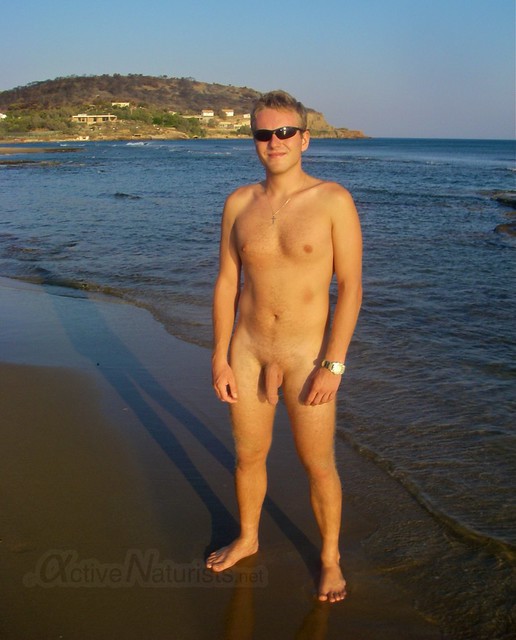
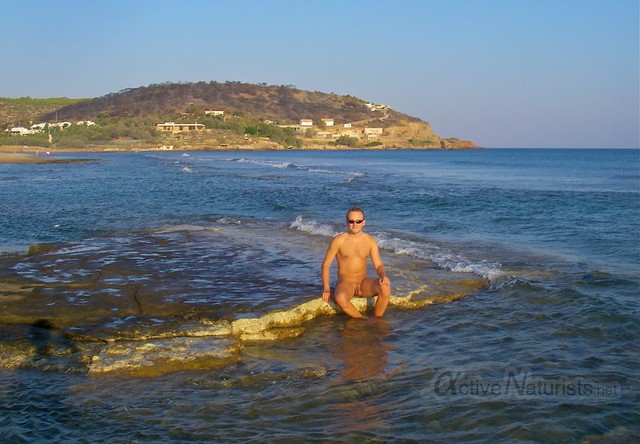
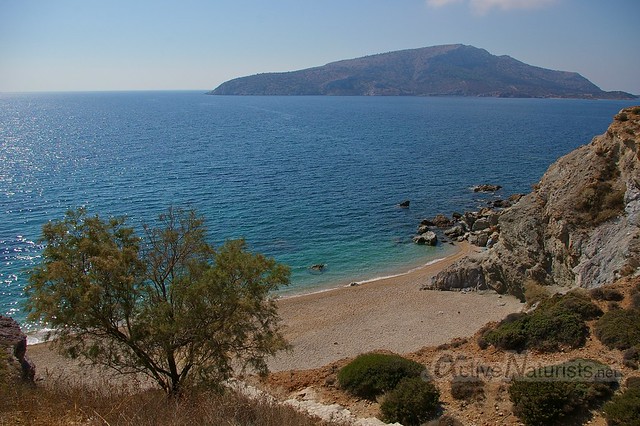
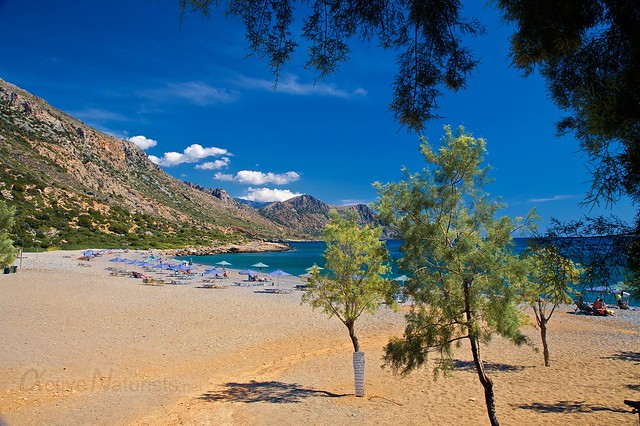
Legrena is located about 2h of bus/car ride from the centre of Athens on the way the cape Sounion, where Aegeus was waiting for his son Theseus after the battle with Minotaur… 
Well, you probably know the myth and why the sea is actually called Aegean. Now the cape features ruins of the Temple of Poseidon, another father of Theseus (yes, he had two fathers!), so it is a popular tourist spot, especially during sunset.
And if you want to combine sightseeing with beach fun, you should stop over at Legrena. There are several beaches of different size, with different ground, open and secluded.
Closer to the bus stop (Athens-Sounio bus) lies a long sandy beach. When we were there in August, it was almost empty, maybe because Athenians left to the islands and tourists do not know about it… It was easy to find a spot with no one else in the nearest 30 meters, but unfortunately it was not easy to find a spot to enter the sea for swimming. Well, it was fine for wading but too shallow for swimming.

But further offshore the bottom is full of urchins, so it’s quite risky to walk.
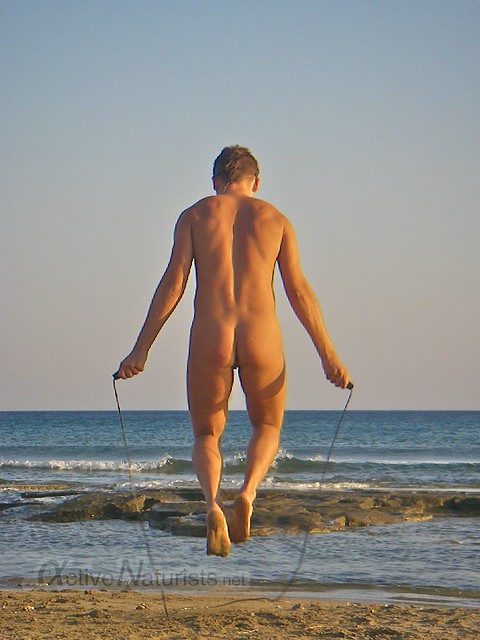
Since it was also windy we couldn’t play frisbee or beach bats. However, we had a jump rope by chance, so skipping was practically the only way to stay active 😉

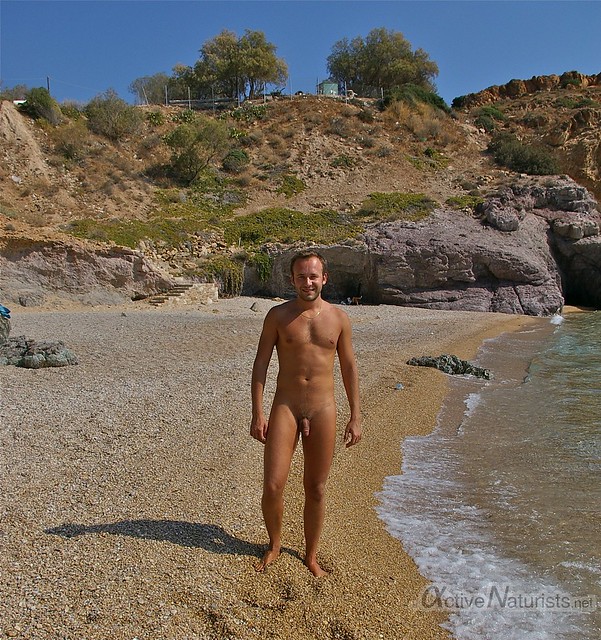
On another occasion in mid-October, on a very hot day, I visited the “official” nudist beach of Legrena.

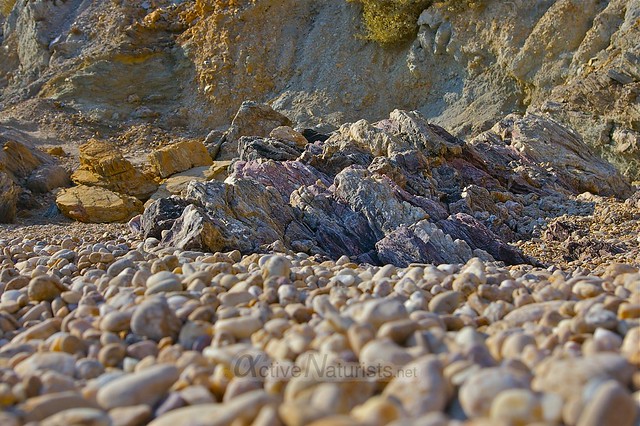
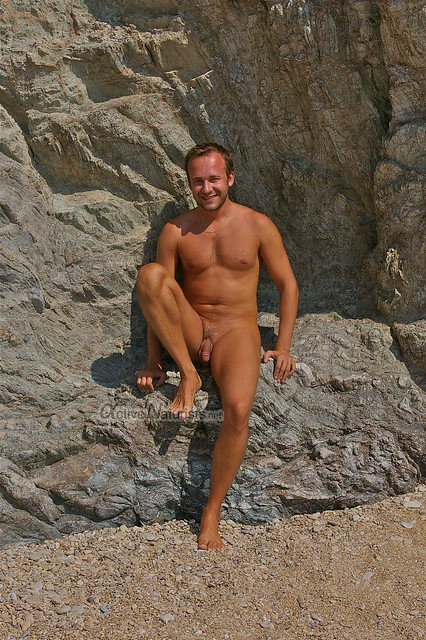
Actually, again even the non-nudist part was almost empty, with one naked man and another clothed in the shade. This beach is pebbly,

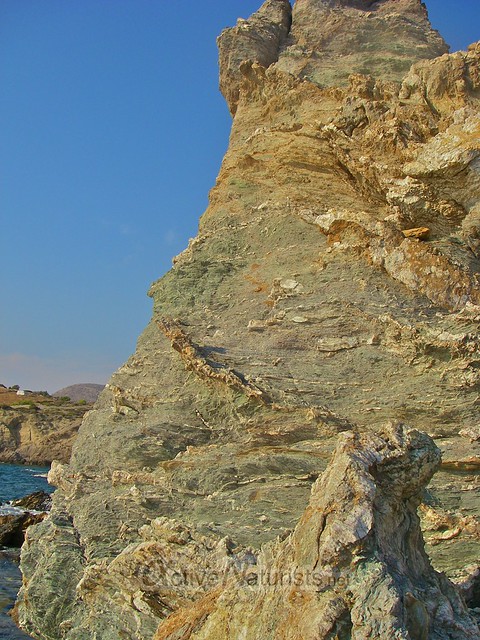
and some of the rocks are light-pink!

As the beach was faced directly to the sun and surrounded by rocks, it got really hot; 
I couldn’t sit anymore and went swimming. I saw several more coves with one or few naked men in each.
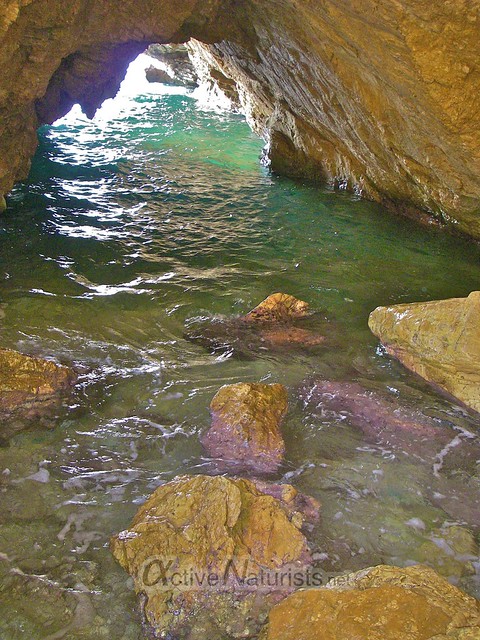
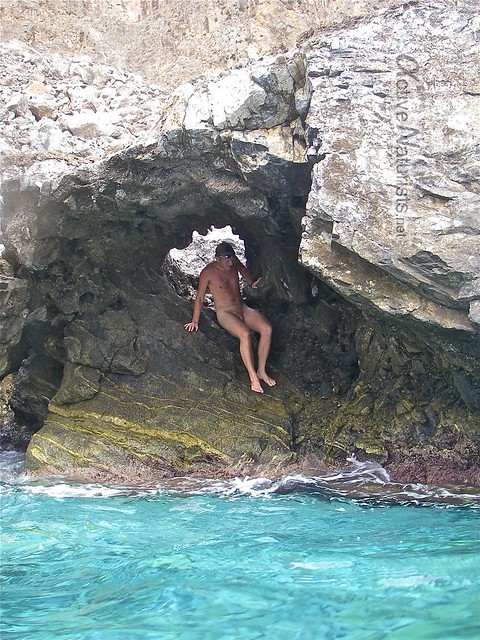
At one of the coves there was a partly submerged tunnel with some bright pinkish rocks.

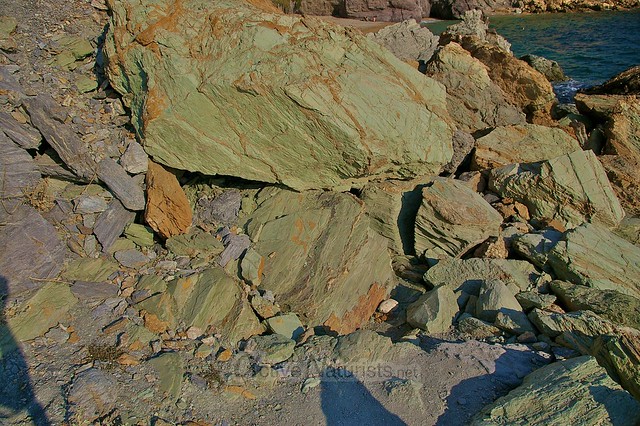
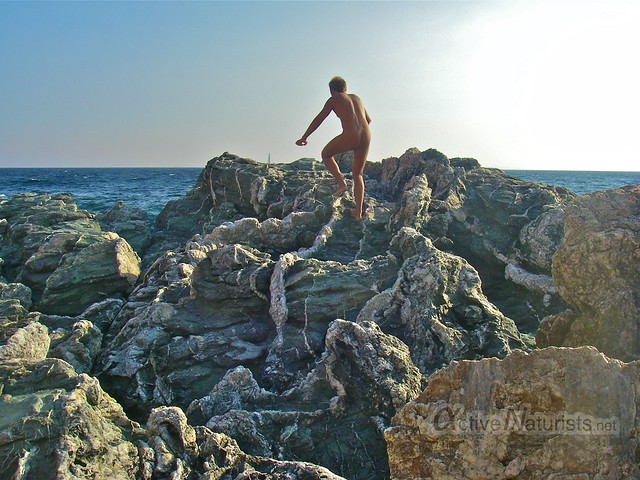
Later I walked to the “official” nudist part of the beach. This time the pathway was full beautiful light-green rocks.

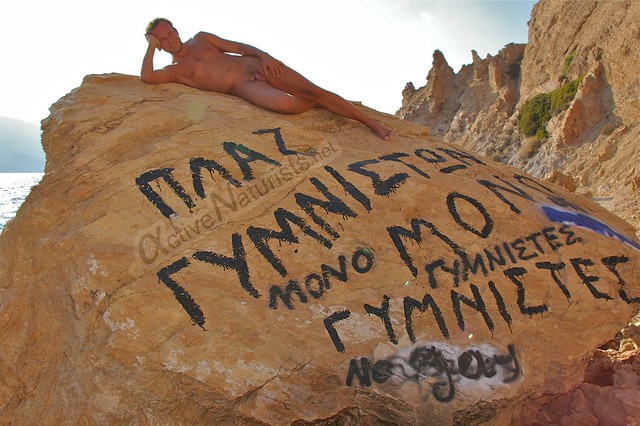
The entrance to the naturist part is announced by a notification (in Greek) on a huge rock.
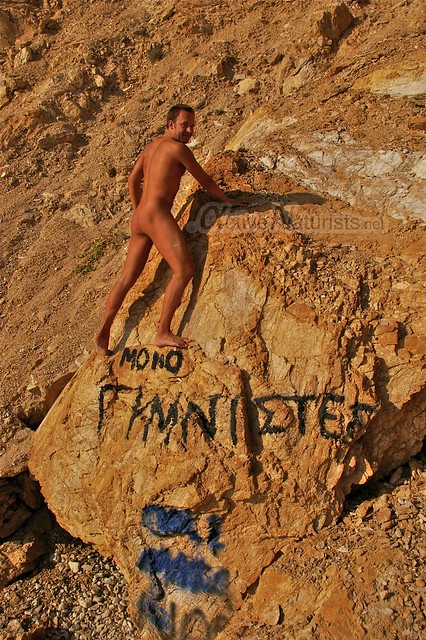
Another announcement is placed in the middle of the beach.

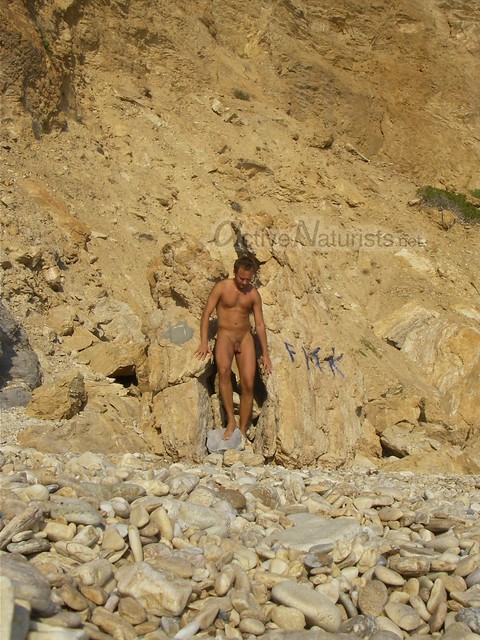
And if you still don’t get the point or cannot read greek, there are some smaller international notifications, like this rock with an “FKK” sign.

Again, there were some rocks of peculiar shapes and colors, like this dark-green ‘mini-vulcano’.

This place must be certainly interesting for a geologist, I bet there are some naturists among them as well.

I wrote about flat rocks of Limanakia, about 1-1.5 hours from Athens city centre, but if they seem too busy, you can follow further from the city and find some small secluded beaches like this one shown on the map.

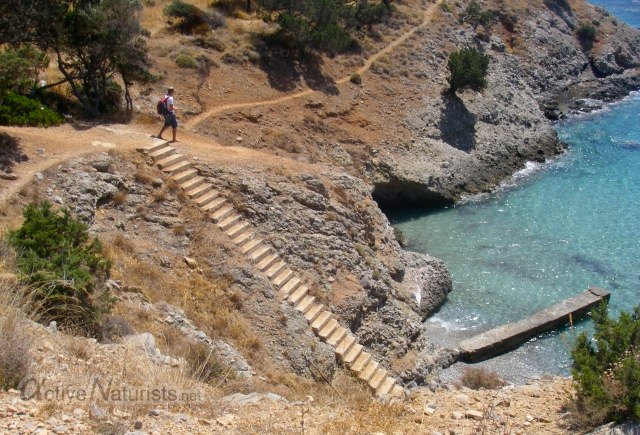
You can go there by the same bus as to Limanakia – E22 – but further, till the last stop actually. Then walk along the sea-shore, passing through an urban beach first, until you reach a place of your choice.

It is simply amazing to find such a nice hidden spot 2 hours away from the buzzing centre of Athens;

perfect for a romantic beach day.
The water is crystal clear, so the place is great for snorkeling.


Of course, we swam naked.
But we wouldn’t be active naturists, if we just swam there.
We also played frisbee
and beach bats. As the beach itself was quite small, we decided to play in water. It made it more challenging and fun at the same time.
PS Given that this place is not a municipal beach, its cleanliness depends on you! Unfortunately we found some garbage on this beautiful beach. We took away what we could, but it’d be easier if everyone just took everything with themselves…
Almost all beaches in south-west Crete are clothing-optional, except perhaps only central town beaches. Many of them are connected with famous E4 hiking trail, so you can walk between them… or maybe swim?
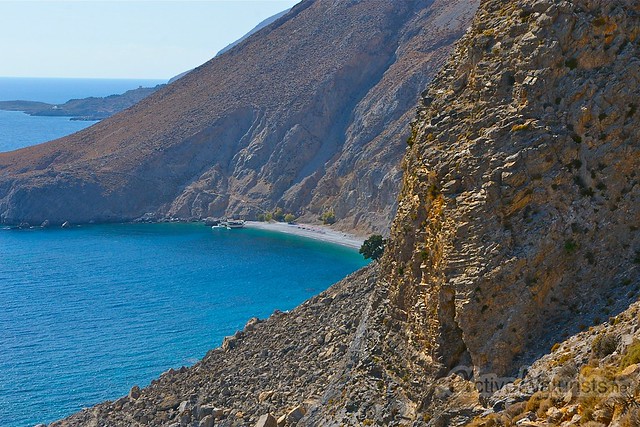
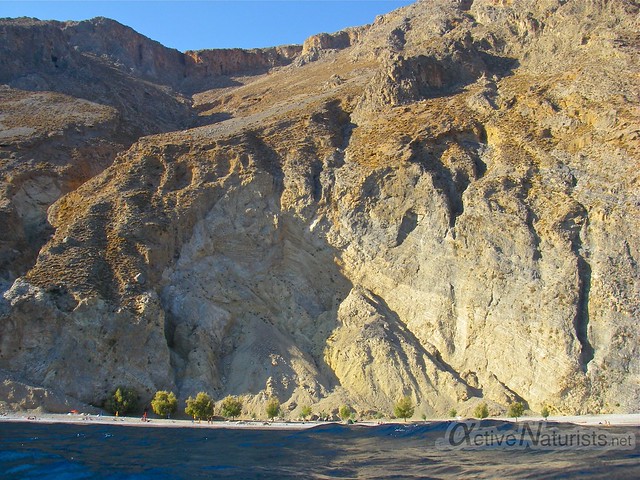
Well, I’m joking, Anidri and GLyko Nero beaches are quite far from each other. Glyko Nero Beach (Sweet Water Beach), as its name suggests, has some underground freshwater springs. Thus this place is ideal for camping. Just dig a half-meter hole in the send, if there are not any already, and you’ll get fresh cold water. Regardless, you won’t die from hunger or thirst there anyway, as there is also a tavern. As the beach is turned to the south and surrounded by high walls of steep rocks,

it can get very hot there unless there’s a strong breeze from the sea. But there are some trees providing good shade,

and also a plenty of umbrellas from the tavern.
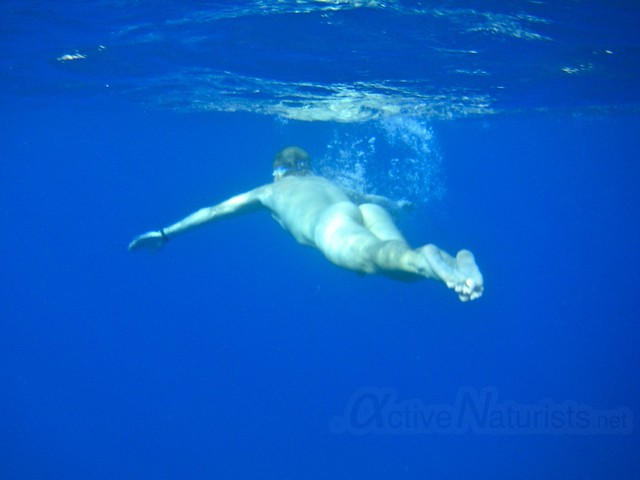
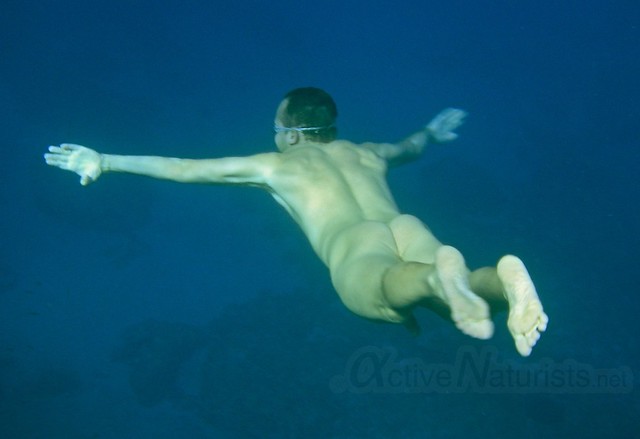
We spent most of the time swimming.

The sea water is very clean and has intense dark-blue color.

Unless you hit the freshwater spring at the water edge, it is also very warm; and certainly, this beach has one of the clearest waters I’ve seen.

At night, thanks to the cliffs surrounding the beach, it is very quiet and dark there, because no light comes from neighbouring town. Perfect to watch stars! As there was no moon, they were so bright that Milky Way even reflected in the water! And when we looked in the water, we saw that it was full of flashing “stars” itself. Bioluminescent plankton was so abundant (at least in the end of September, when we were there), that anytime I moved my hand in the water there were flashes around, as these organisms respond to mechanical disturbance with glowing. This is why they also flash a lot, when waves break onto the shore. I would highly recommend to swim at night (with goggles) to see how the water glows around you and your swimming buddy.
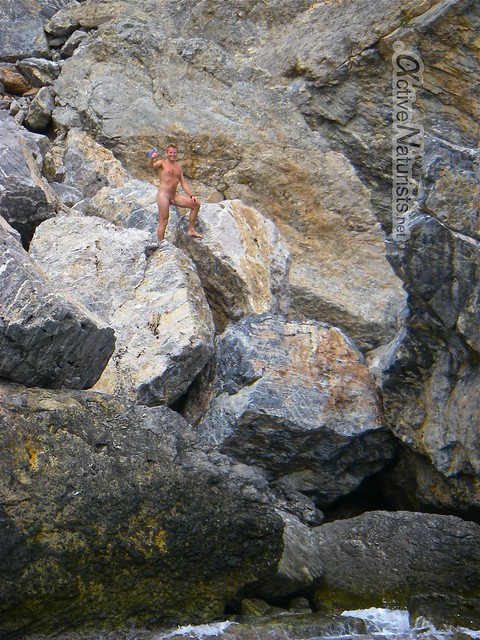
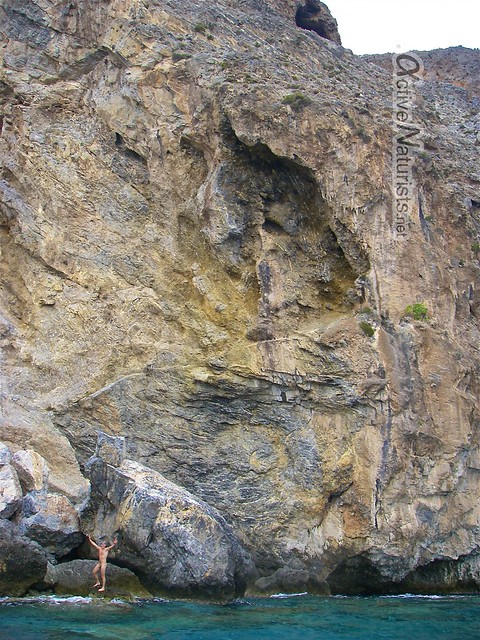
However, be careful with the above mentioned cliffs – don’t build you camp to close to them, because once in while some rocks were falling down, sometimes because of the goats jumping. They like coming to this beach to drink fresh water in those man-made holes, and you can see their incredible ability to walk on nearly vertical cliffs.


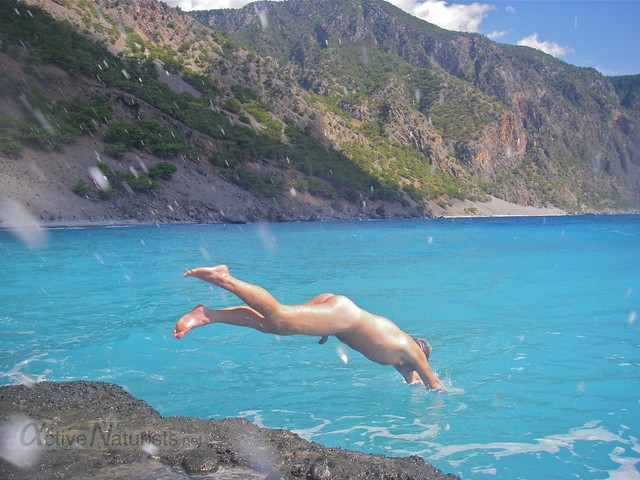
and then were diving from them.

To get to Glyko Nero beach you may use a small former fishing boat which comes from Hora Sfakion directly to the tavern twice per day at about 10:00 and 17:00, or like we and many hikers, come by E4 hiking trail. From Hora Sfakion, you can also first go by car in the direction of Loutro till the sign E4 Glyko Nero/Sweet Water Beach. However you get there, you’ll surely love this beach!

Samaria Gorge and beach at Agia Roumeli provide a perfect combo of adventure and secluded relaxation. Samaria is the longest gorge in Europe, 12.4km, so be prepared to walk for several hours. The good news is that you don’t need to carry water with you (maybe just keep half a liter with you), as there are springs at regular distances. It is a very popular national reserve with regular buses departing from Hania and other towns of Crete. It is better to ask in advance if the gorge is open on the day you want to go there, because it may be closed under some weather conditions.
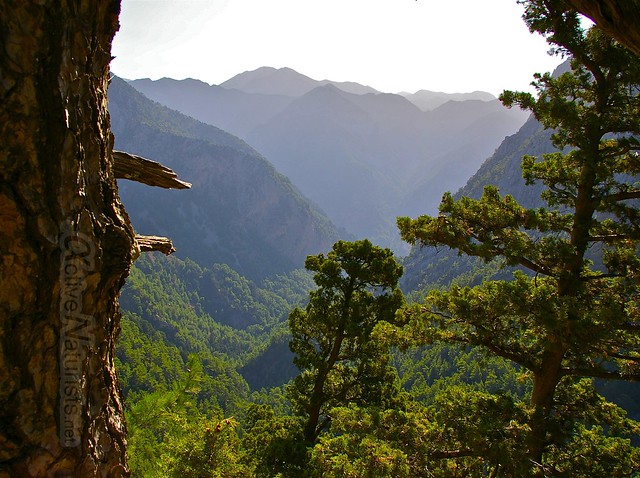
First, you will descend by very well organized hiking trail with magnificent views over the gorge and mountains around.

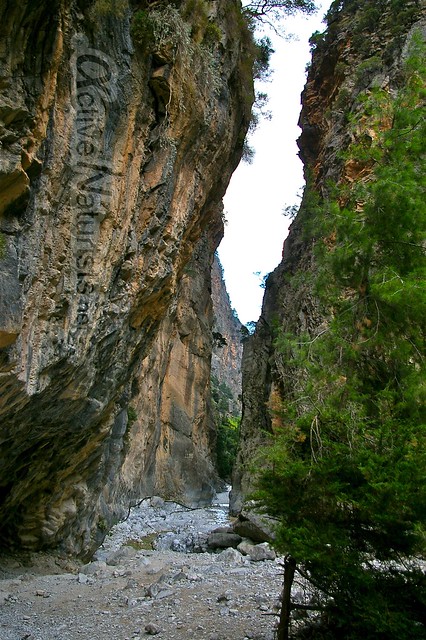
The second part of the route lies in the river bed (during summer Samaria River comes to the surface only in some parts) between vertical rock walls up to 300m high.

That is especially impressive in several points where the cliffs from both sides get really close to each other, just few meters apart! It can be dangerous as the signs say, and we heard once quite a terrifying noise of falling rocks somewhere aside.

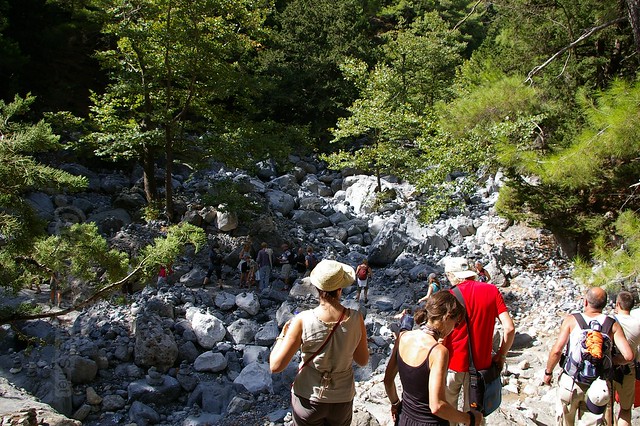
During the first half of our walk, the trail was often overcrowded with tens, if not hundreds, of people literally rushing one by one. Later we realized why they were in such a hurry: the ferries from Agia Roumeli, a village in the end of the gorge, leave to Hora Sfakion and Paleochora at about 16:30. This is why almost all hikers try to walk the whole way in about 6 hours. Luckily we were going to camp in the end, so we spent almost 10 hours in the gorge and could enjoy all astonishing views.

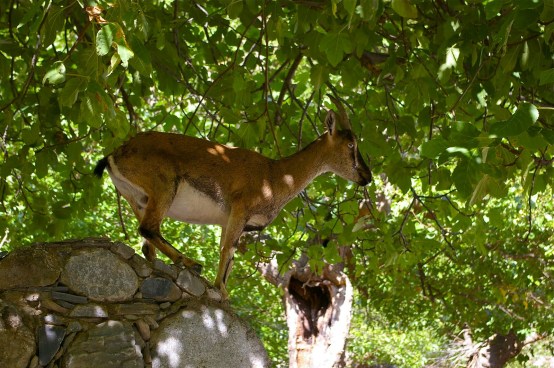
So, during last 3 hours of our walk, after these settlements, our only encounters were feral goats and kri-kri, Cretan subspecies of wild goats, endemic to the island.
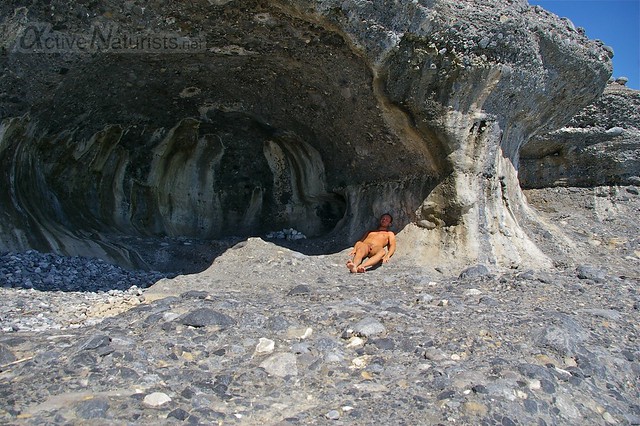
After eating in a tavern in Agia Roumeli, we went to look for a camping place. A small pinery just left of the isthmus of the Samaria River was already occupied by half a dozen campers, so we continued looking for a place for our tent further on the beach in the dark… and we found it! An entire cave had been waiting for us exclusively 🙂 What was especially pleasing was that the floor in the cave was of fine dry soft sand, whereas the beach itself was mainly covered by pebbles, many of tennis ball size, very inconvenient to walk on. The cave had accumulated the warmth of the day, so not only did we not need to go inside our tent, we even did not need to cover! Watching the starry sky from the cave felt like in a cinema. The only problem was that the noise of waves echoed in the cave and thus doubled, so don’t expect quiet, but the sound of sea is your thing, you’ll be happy.
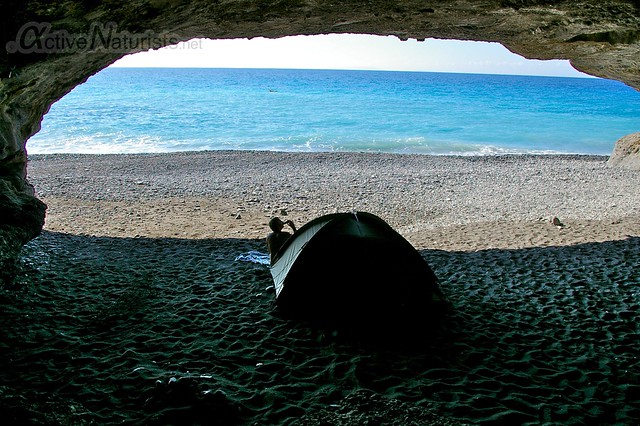
In the late morning next day, a few people came to the beach, but the cave remained pretty much our own.

With quite strong waves, the water there gets full of air bubbles, and it gives it incredibly intensive light-blue color… somewhat resembling the Greek flag =)

Further to the east lies another beach Agios Pavlos with an old church from Byzantine times, but unfortunately we did not have time to go there – it’s good to keep something for the next time, we thought.
Right next to the cave, there were some interesting rock formations.
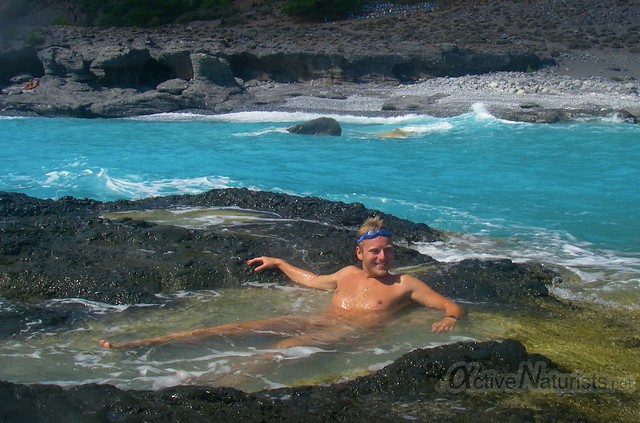
While swimming around, we found some rocks offshore with sort of bathtubs on them.

How cool, after a bathtub, you can dive into the sea!

And getting back to our cave I couldn’t resist imagining myself as a caveman.

Though it was also nice to just lie down and relax there…

Hopefully this place will remain as beautiful and unspoiled as we found it!
A pretty long stretch of the seashore east of Paleochora has three pebbly beaches known as Anidri or Giliaskari.

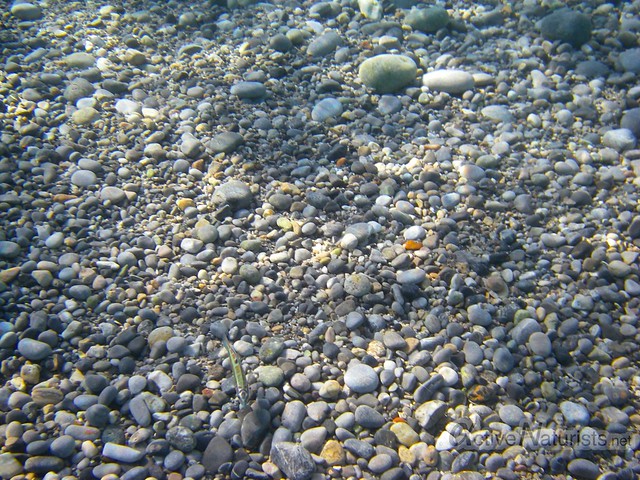
Pebbles of the third, easternmost, beach are very small, which make it very convenient to walk on in contrast to big pebbles on other two beaches. In any case, probably thanks to the pebble floor, the water there is incredibly transparent.

We were there on a very quiet day with almost no wind, so we also played frisbee (there was enough space to not bother anyone with that).
Then we had a few pleasant swims without any waves, so we could easily practice different styles, mostly breaststroke
and front crawl.
Giliaskari beaches are well organized, with cafes, small taverns and outdoor showers – all well integrated with natural surroundings.

And we really enjoyed those outdoor showers in the sun 😎

As it’s a pretty long walk back to the town of Paleochora, it’s not a bad idea to wash the salt off you skin.

As if you couldn’t guess without it 🙂
Español
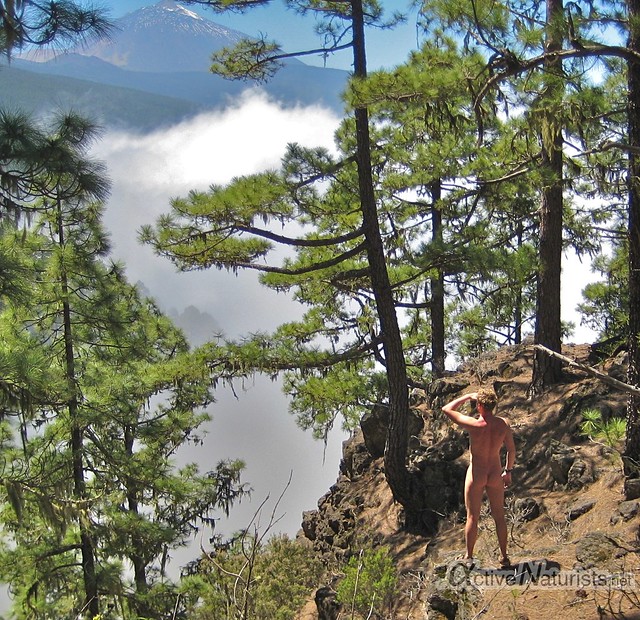
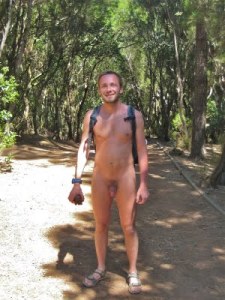
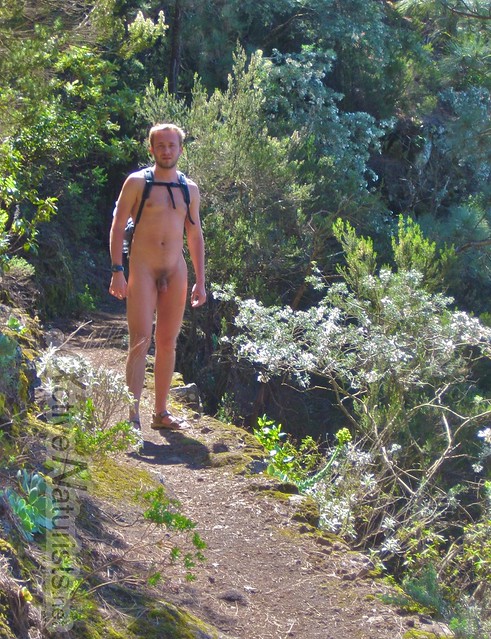
Tenerife has a lot more to offer to naturists than beaches. You can go hiking clothes-free even in a mountain forest, with the subtropical sun and warm temperatures year-round. Here we suggest a route (shown approximately on the map) that we took from Los Organos to Güímar: two days of pure mountain air, pure nature, pure naturism! Three days would work better for a more leisurely hike 🙂 This is not an official nudist area, but given general acceptance of nudism on Canary Islands, nudity is generally not an issue, and this area is anyway large enough to avoid encounters with other hikers. Most probably you will not see other walkers at all, if you do not walk on major trails.

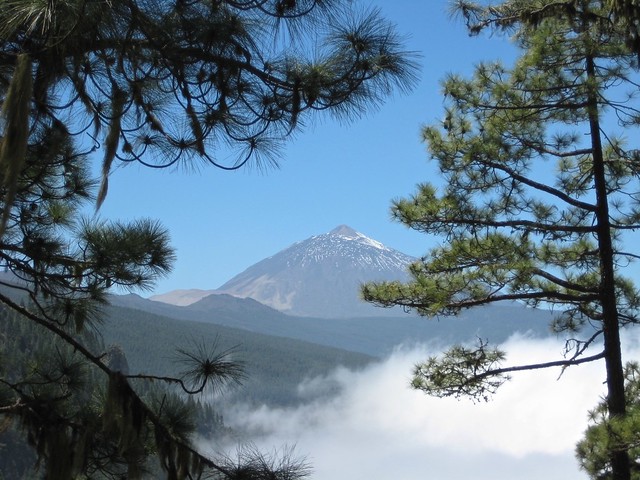
But what you will see is breath-taking views down the valley

and up to the snow-capped mount Teide!

To get to Los Organos take bus 345 or 348 from Puerto de la Cruz or La Orotava. The bus stops right where the route starts as shown on the map. First, you will walk on a pretty broad road, but already there you may take off the clothes,

and certainly so as soon as you decide to climb by one of the smaller trails up the mountains (see the map, but unfortunately we cannot provide exact details of our hiking route, so please take care which trail to take or just follow the main ones, but then you will need more time (or a bike) to complete the trip).

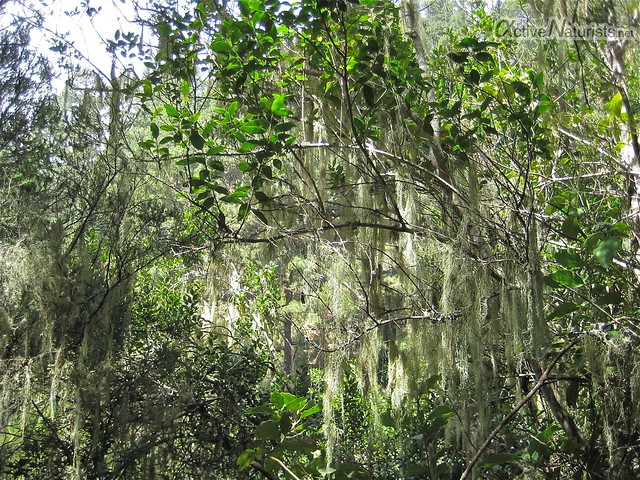
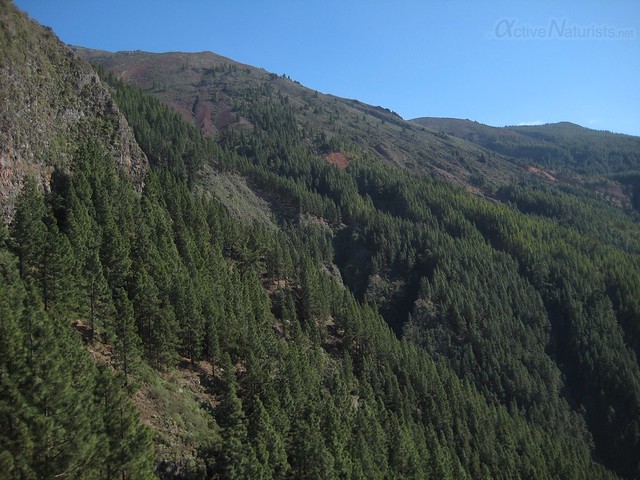
This part of the forest, on the northern foothills, is quite humid, with pines and cedars covered by “beards” of lichens.

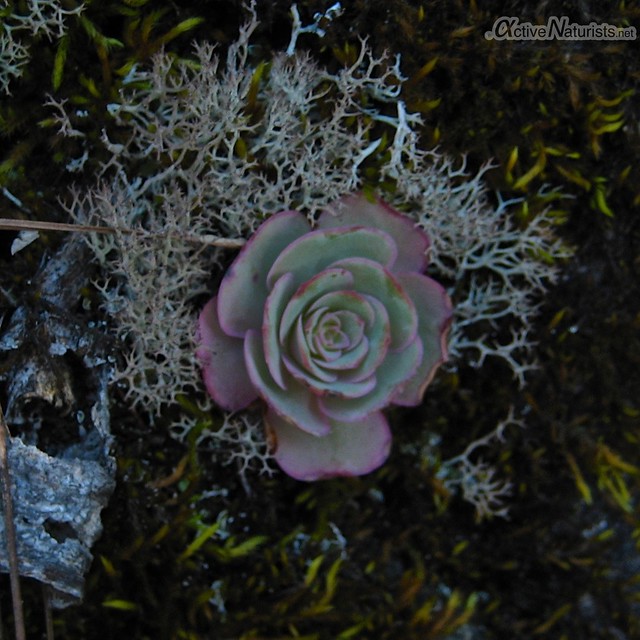
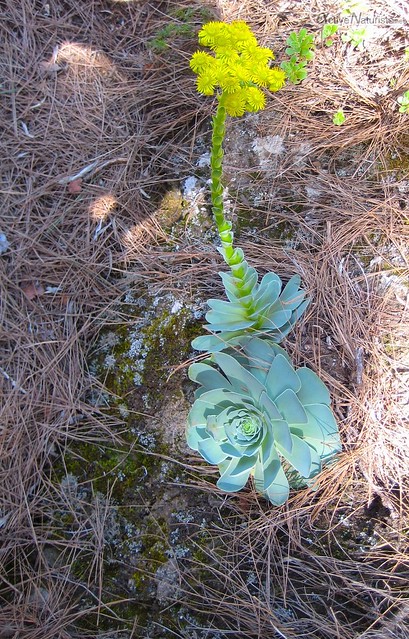
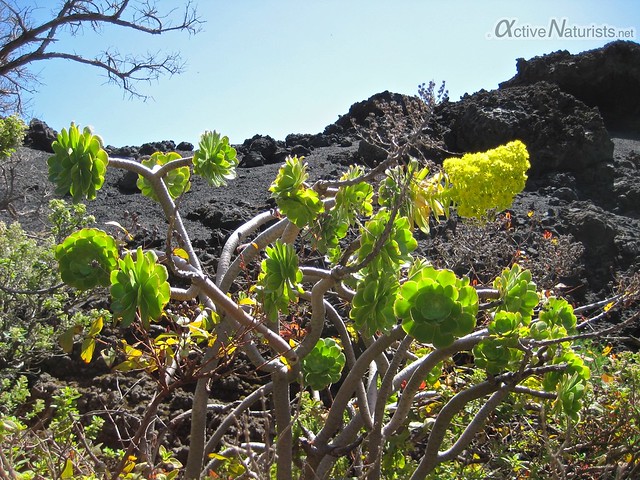
But succulents, more common on the drier southern side of the island, thrived there too,

blooming –

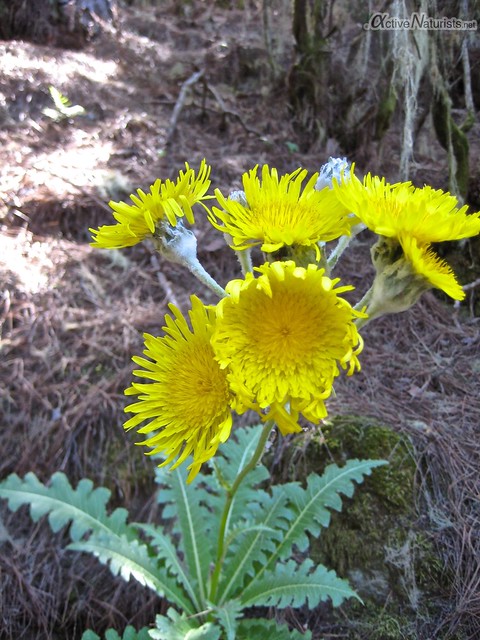
but not only succulents. I am not sure about seasonality of blooming on Tenerife, but when we were there in the end of March, it seemed like spring was in full swing.

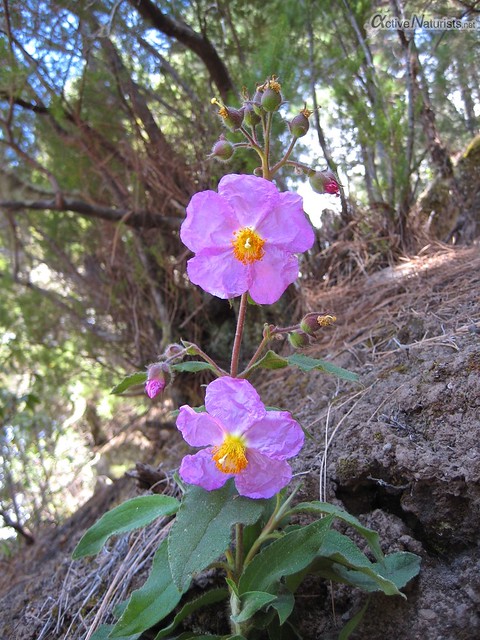
There were many flowers,

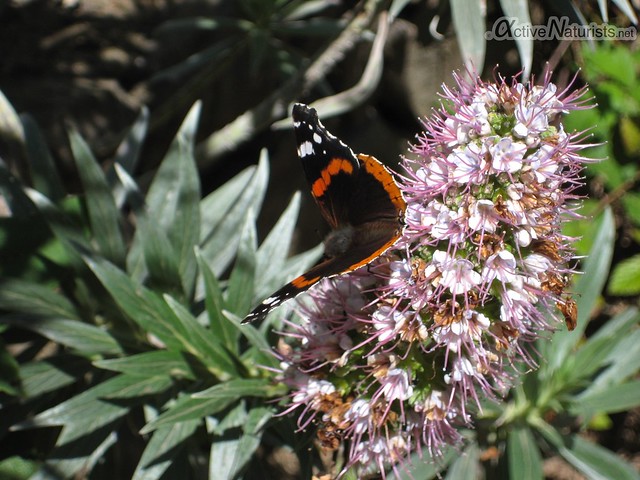
some looked familiar from European gardens. And we were certainly not the only ones to enjoy their colours and aroma.

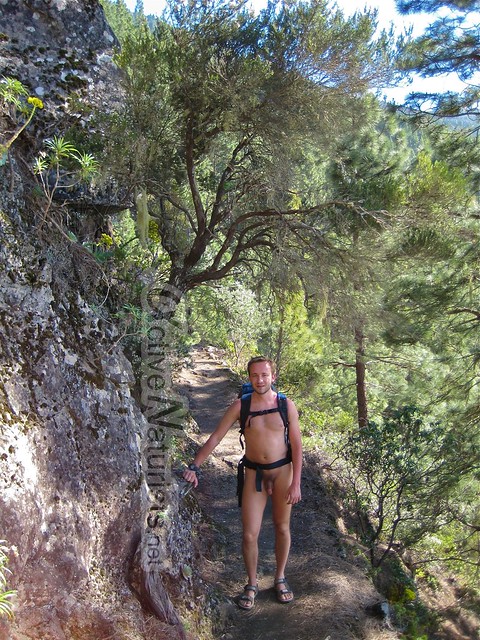
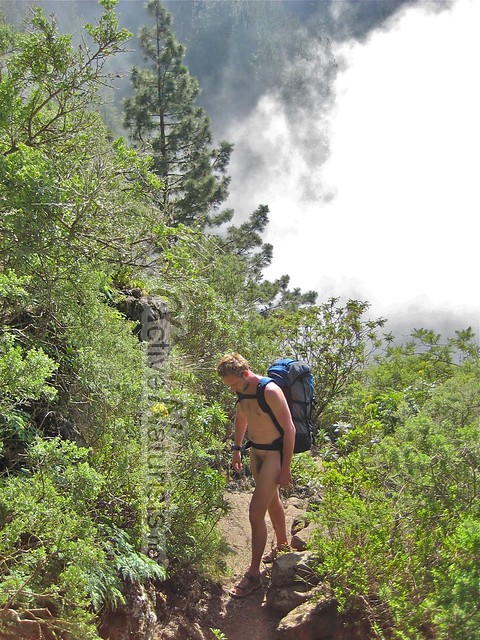
The way up the trail in that part is not dangerous but still challenging. Once you are high enough, you will be rewarded with magnificent views and tranquility. Get some rest and follow a narrow horizontal trail
(hope you’ll find it! But if you keep going up, you cannot really miss it, as it lies across the foothill). In some places, the mountainside is really steep,
but then there are hand-rails along the path;

or you can hold on to the rocks.
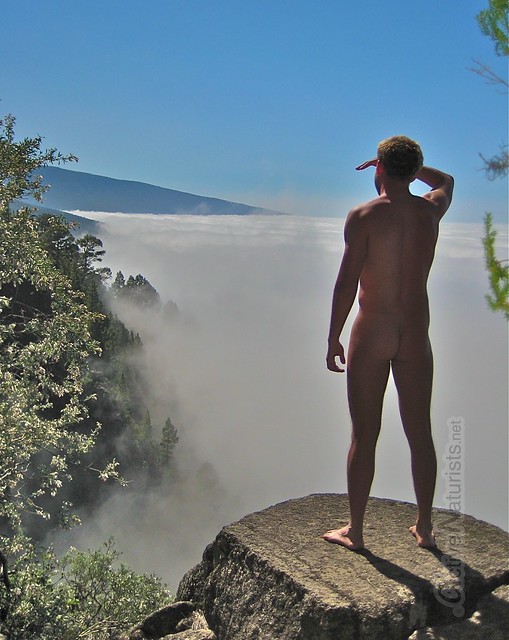
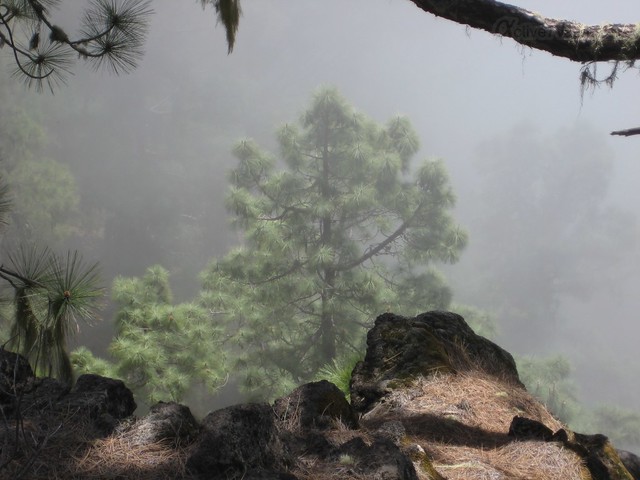
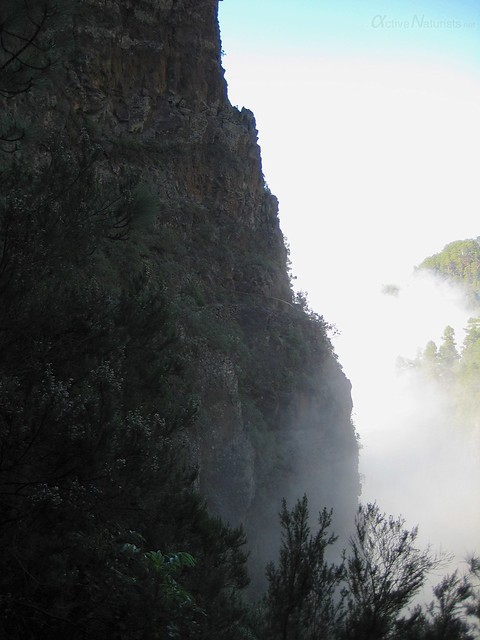
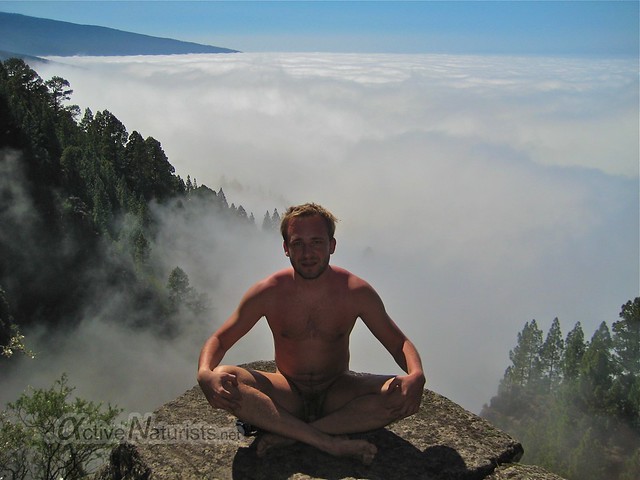
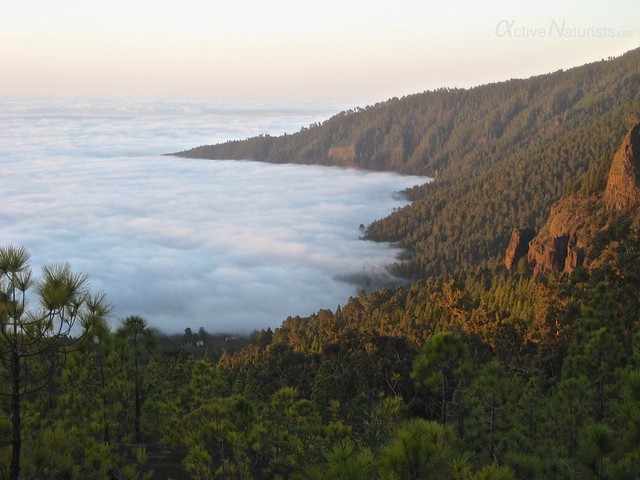
But when you see clouds right below you, you just feel like a god able to float in the sky 🙂 
Bit by bit the forest was getting drier, and there were some eucalypti among the local flora,

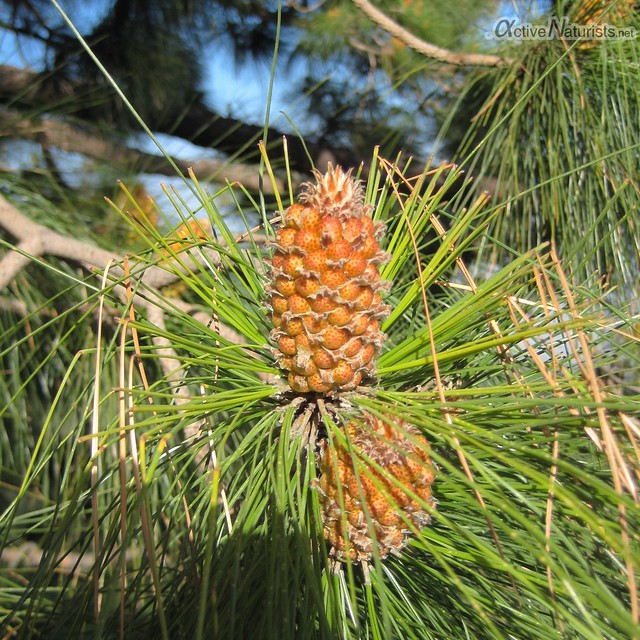
but pines were predominant,

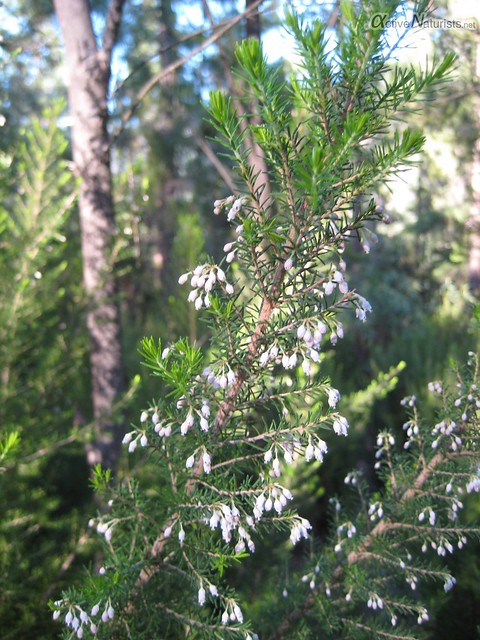
along with bushes that we couldn’t identify.

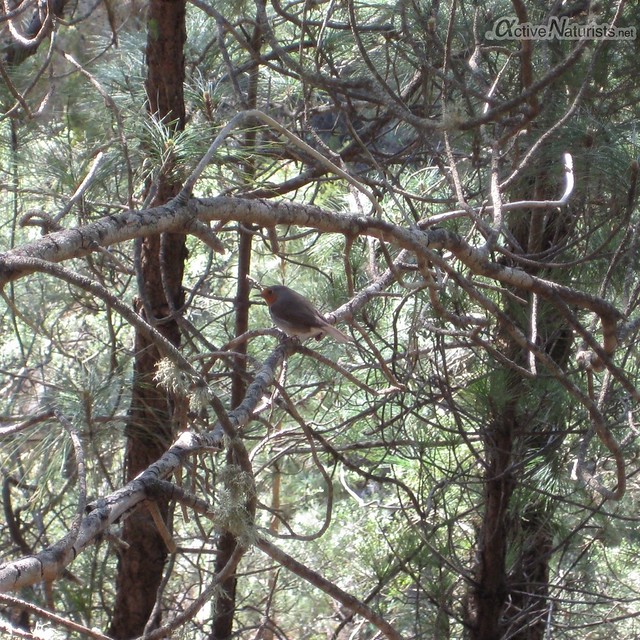
We didn’t see much of fauna, but a robin kept us company on a short lunch break,

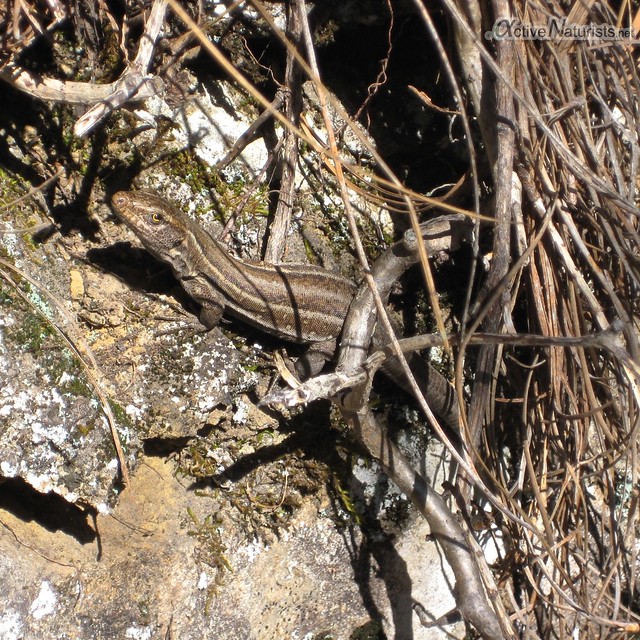
we saw several Tenerife lizards.

We were stupid enough to get off that horizontal trail to try a shortcut, and continued climbing up on quite a steep and not very stable surface.

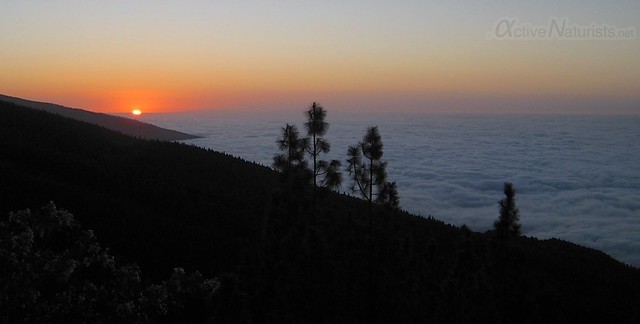
Well, at least we were rewards with absolutely magnificent views as the sun was setting… still above the clouds!

As we were above the forest line, it took some efforts to find a flat spot to camp for the night; it was by a massive pine tree, which stood solely over the rocks and bushes. At night the wind was very strong and chilly, so our advice is to sleep in the forest and better continue climbing up the mountain range in the morning.

Shortly after we woke up, we reached an asphalted road TF-24 and headed north-west, passing through the border of the national park of mount Teide.

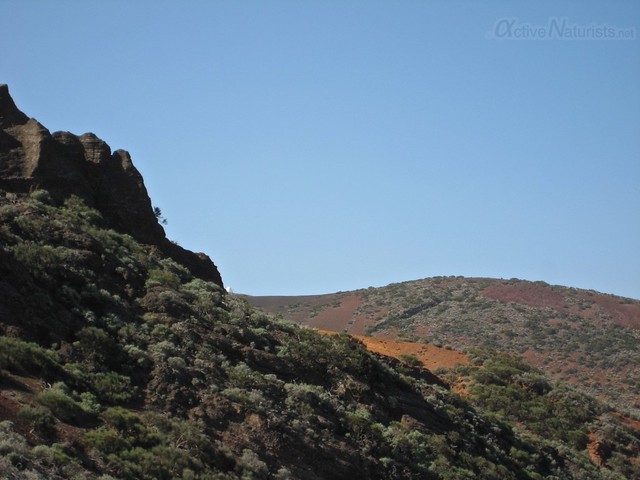
When we got to an information point with a map, we could confirm we were on the right track. There also was a nice view south, with a small black (sleeping) volcano – this is where we were heading.
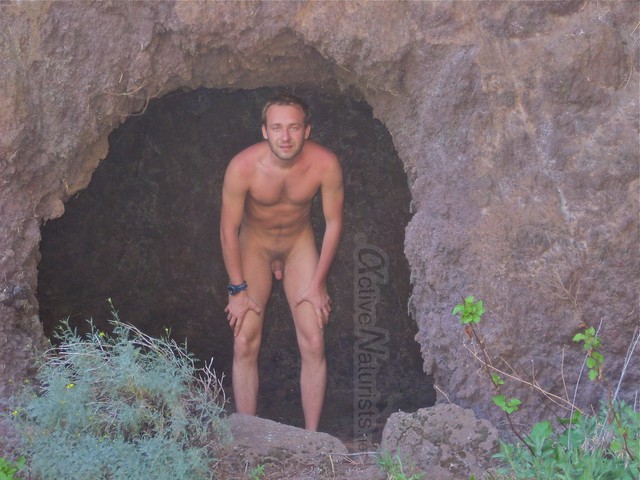
After we got off TF-24, we followed a trail again, this time already downhill. We often picked narrow shortcut trails, but along the main wide trail we saw two caves, which could be nice place for an overnight stop if we had more time.

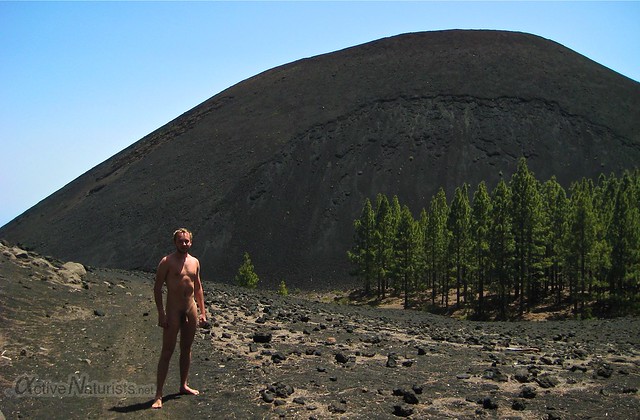
In about an hour after the information point, we finally got to the black volcano. The landscape looked quite surreal – an island of black desert in the green sea of pine forest…

And some more flowers:

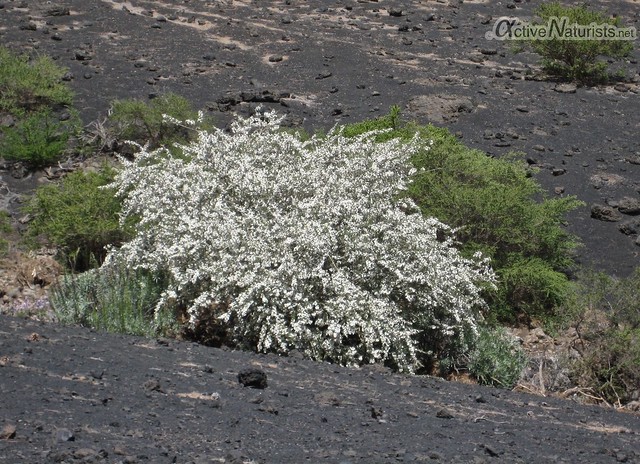
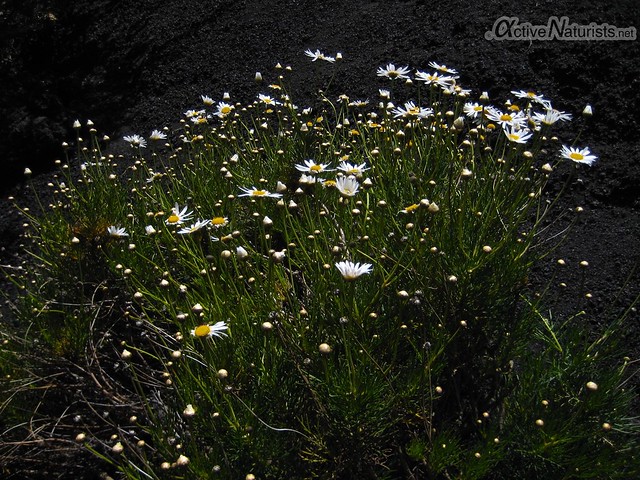
the white ones, like these on an unidentified bush

camomiles stood out against the black background of the volcano;
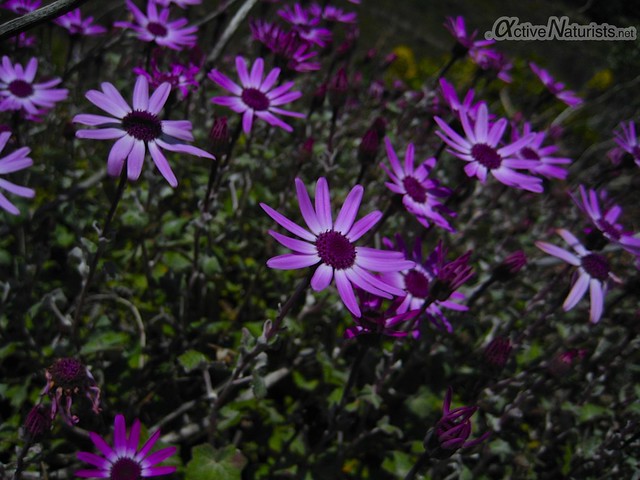
but their purple relatives

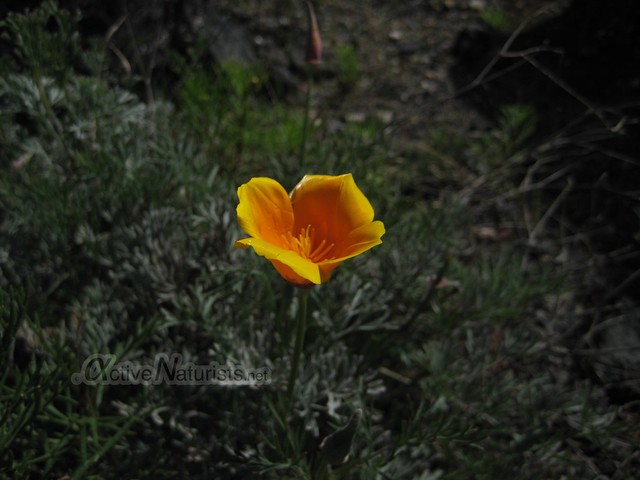
and an orange poppy looked beautiful too!

And as expected on the drier southern side of the mountains, there were plenty of succulents,

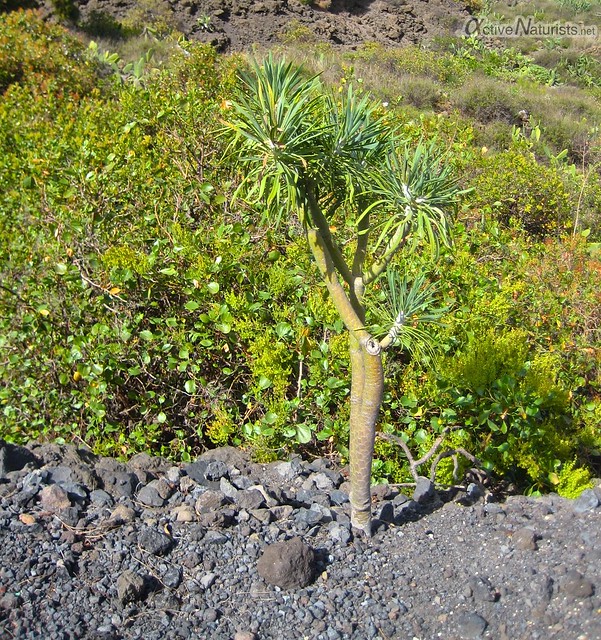
including a young specimen of the famous Canary dragon tree.

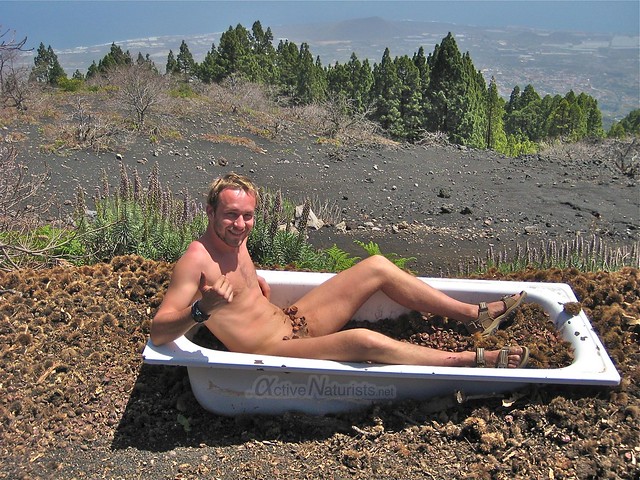
Behind the volcano, we finally saw the settlements, the right one being Güímar. But we were still a couple of hours away from there… So, we took some rest and bathed in a tub… filled with chestnuts 😀

Maybe you will also be lucky to do the hike in the season of figs or prickly pears (fruits of opuntia cactus), which are a good source of precious liquid (but take care of spines, and if you get some in your fingertips, just stroke your hair, as advices by my Mexican friends). Oh well, at some point you will have to wear your clothes, as gradually you will get back to civilization – starting with some remote villas and then the town of Güímar. When in Güímar, visit black pyramids, but the experience of free-hiking above the clouds is surely much more memorable!!!


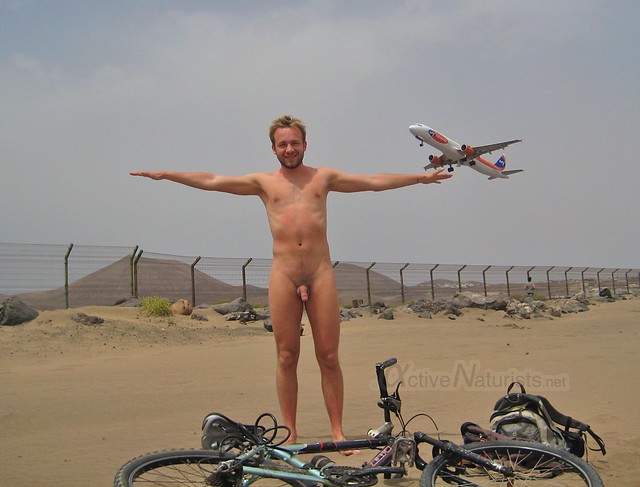
It seems naturists are really welcome on Canary Islands. Right next to the airport of Arrecife there is a quite long nudist beach

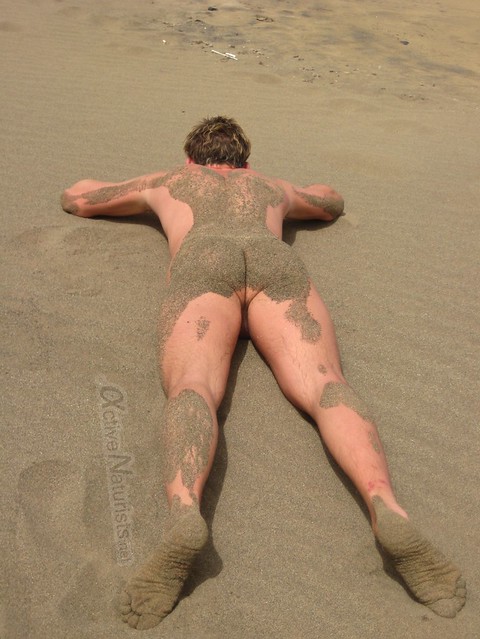
with very soft dark sand, Playa Guasimeta. Airplanes take off just along the beach, but this gives it charm of its own.

So, if you can’t wait to stretch out and get naked after the flight, just go there and relax on the sand. It’s also a short bike ride from the city.
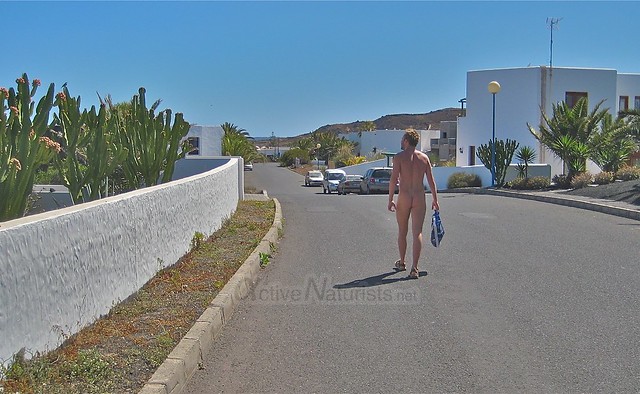
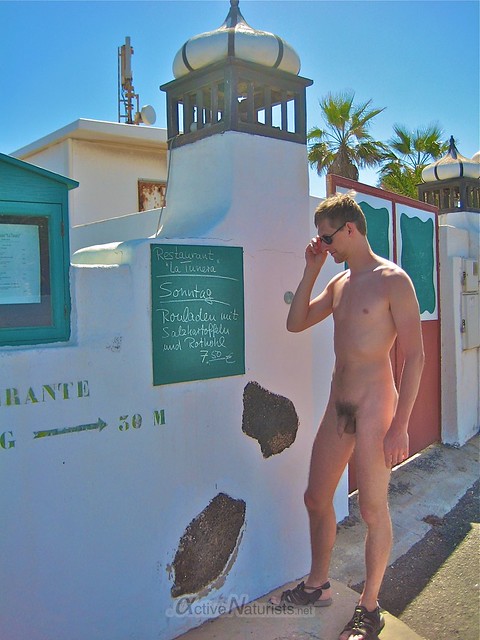
An entire naturist colony, the village of Charco del Palo, is a special place for naturists on Lanzarote – you can stay clothes-free even outside of the ocean shore area and don’t need to think of clothes even when you walk to the beach from your house down the streets of the village. 
Or even if you go to a restaurant? Unfortunately they had a siesta break when we were there, so we could only check the Menü (it was in German, of all languages). 
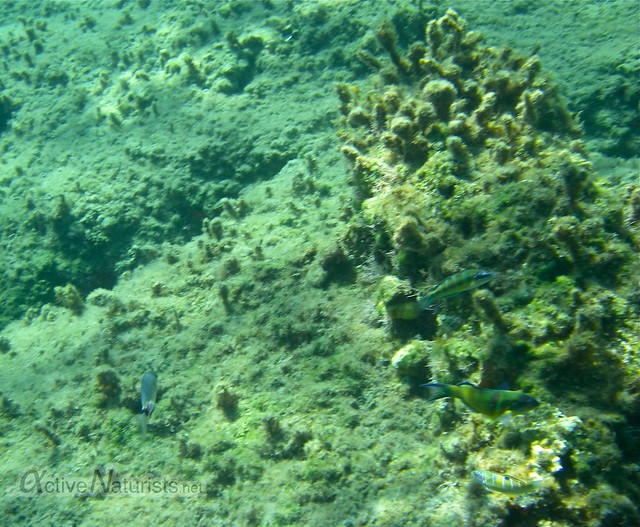
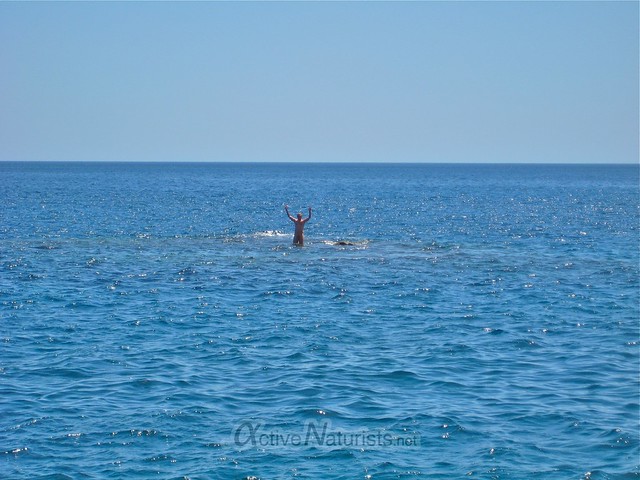
It is also a great place for snorkeling and diving, as there are a lot of different fishes and algae on the rocks. About a hundred meters off the shore, there are submerged rocks that make a nice point to swim to. On the way there, I saw some rays gliding by the bottom.

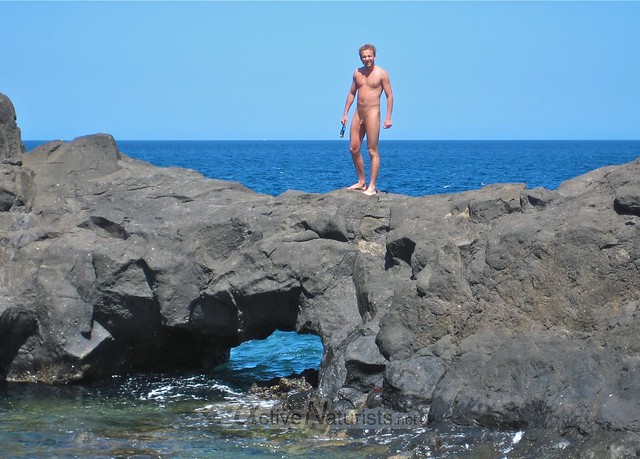
And there is an arch-like rock formation that you can walk on (and swim under).

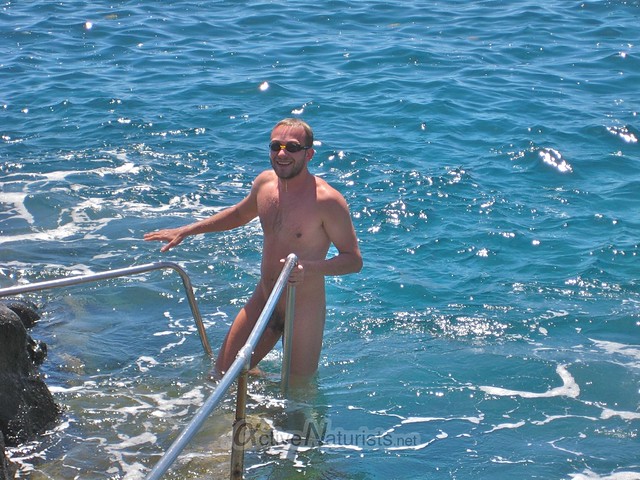
Despite the rocks, the entrance to the water is not difficult thanks to the hand rails. 
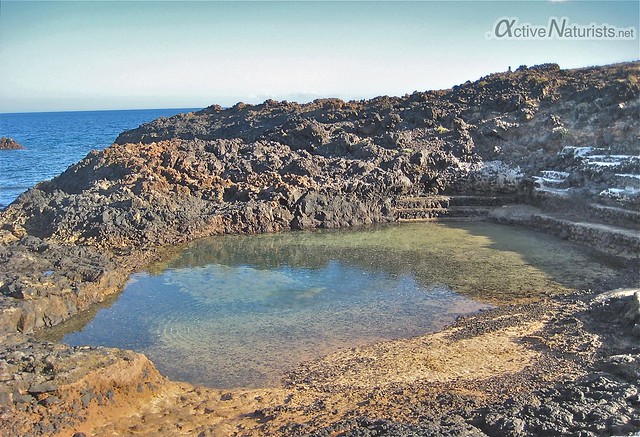
Small children can play safely in the waters of 2 natural tidal pools, as they are shallow and protected from waves.

If you walk around on the rocky shore,

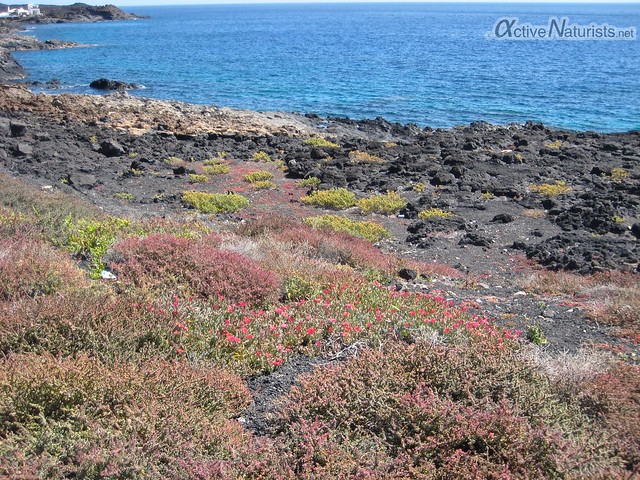
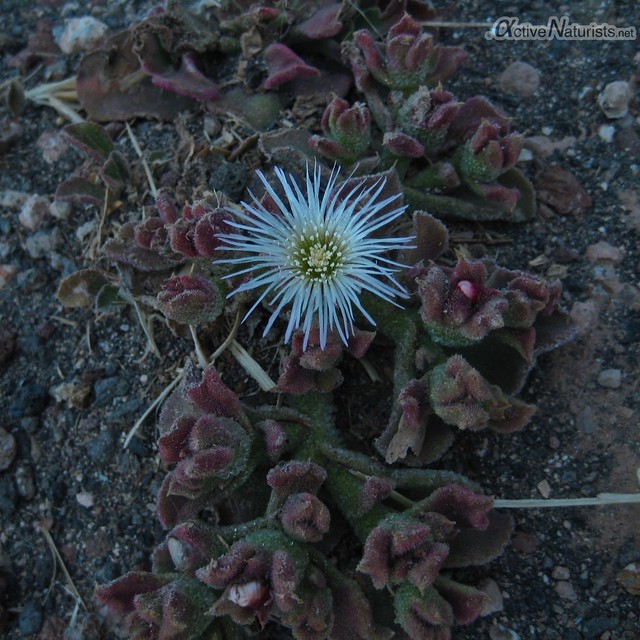
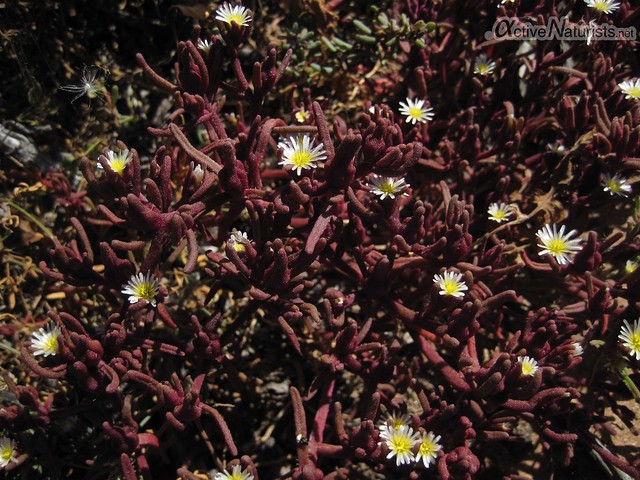
you’ll see a lot of shrubs and succulent plants, many of which are you unique to Canary Islands.

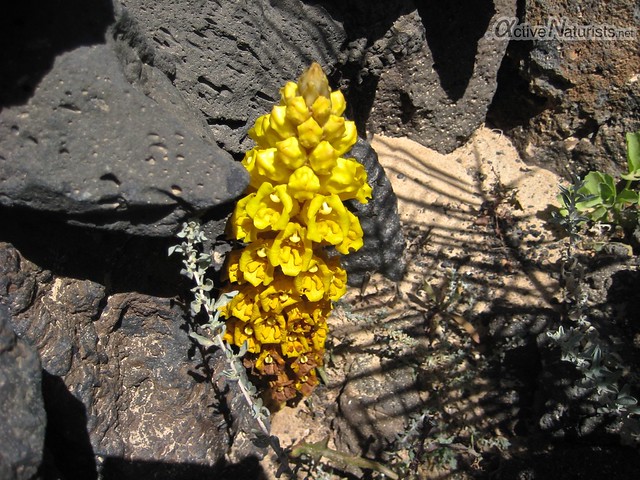
We were in time for their blossom (later March) of succulents,

so as this parasitic plant called desert broomrape, which doesn’t have its own leaves (well, even some plants here prefer to stay naked!)

Check this web page for more information and directions to Charco del Palo.

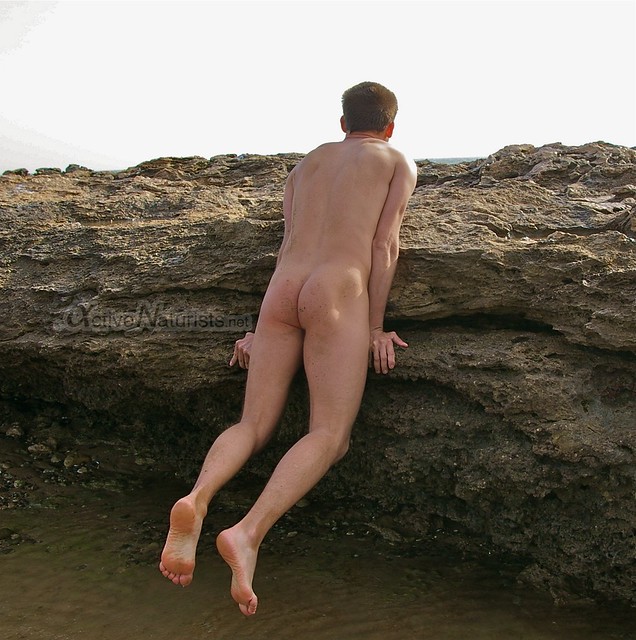
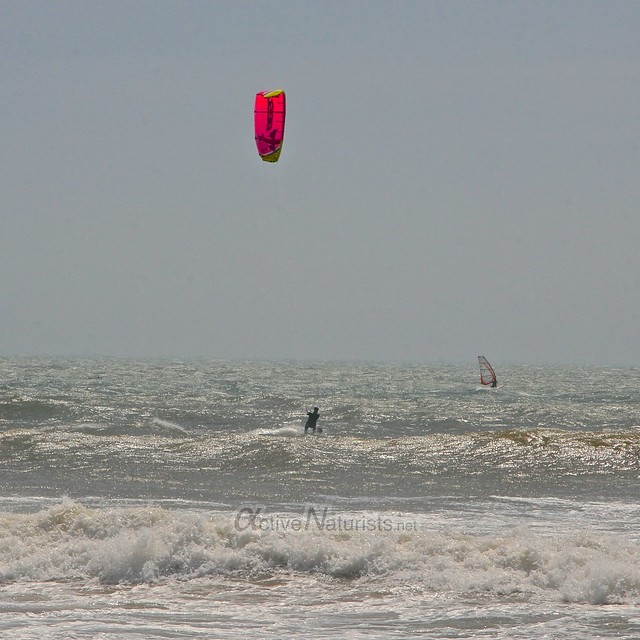
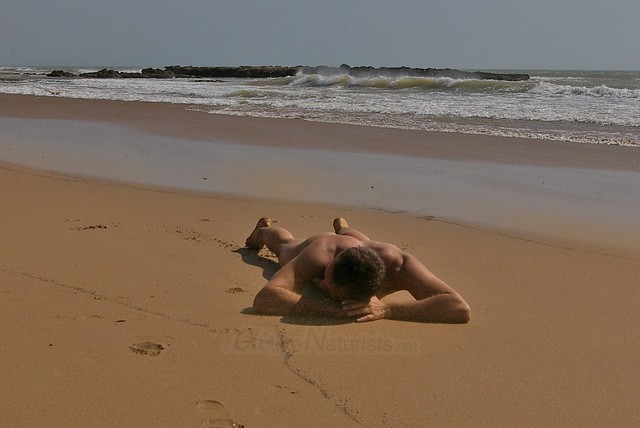
Beaches near Essaouira, Morocco, are famous for its excellent conditions for surfers of many kinds.

The beach shown on the map here apparently is not used a lot, 
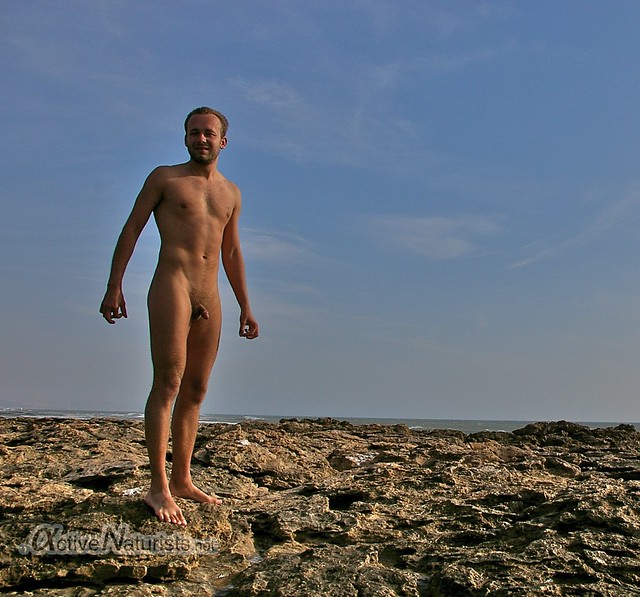
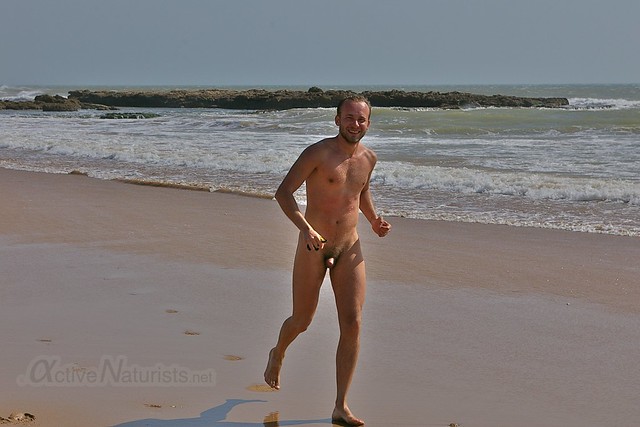
so you could try nude surfing… Or jogging,

or just sunbathing,

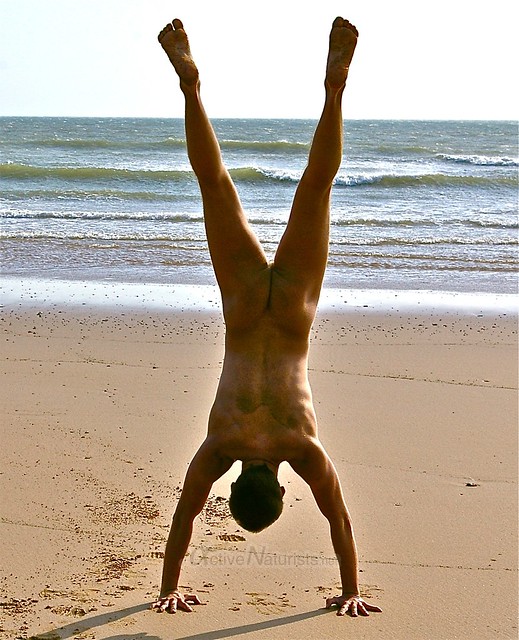
whatever you like.

… like a handstand?
As the water is cold there because of the upwelling, you can’t swim too long. And the waves are really strong too.

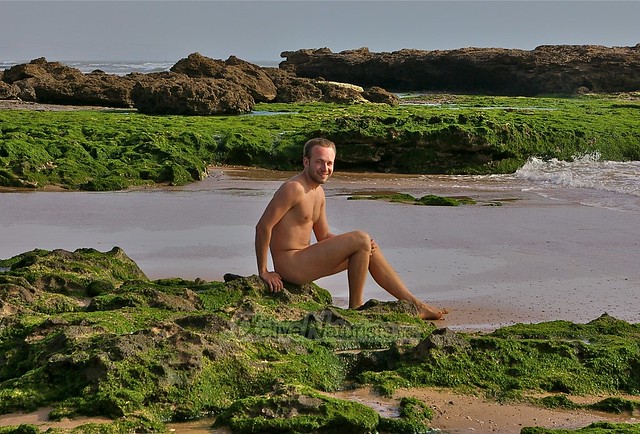
At the low tide, rocks covered by bright green algae look surreal contrasting with yellow sand of the beach.

If I go there again, I should do some surfing, however!