official(!) naked-friendly trail and water hole in Mohonk Preserve, NY

I haven’t counted exactly how much but a good share of our blogposts is about hiking. This one is special because it is about a trail that is officially designated for nude recreation! Yes, there is one (hope not the only one!) – at Split Rock in Mohonk Preserve, New York! I heard about it from Young Naturists America, as they organized a couple of outings there; you can also read about their correspondence with the park officials as to why there is no information about this trail on their website. The bottom line is that this is a private land, and one of the conditions of the owners to give it for public use was keeping its tradition of skinny-dipping. Well, if only more land-owners were like that!

Unfortunately, clothing is only optional behind the actual Split Rock formation (the name speaks for itself – it’s a split rock with a creek and small waterfall in the middle), and the nude-friendly trail is just about 10 min walk of easy hiking. I had a bitter-sweet feeling about this place. On the one hand, it was exciting to finally find an official place for naked hiking. On the other, it also seemed unfair to not include the main attraction in the clothing-optional part. Come on, if you decided to give ONE single trail of a huge preserve for nude recreation, can’t you give at least this one entirely?

naturist 0000 Mohonk Preserve, NY, USA

Nevertheless, I was happy to see this sign – I could get naked in the forest, ‘as nature intended’, without worrying about rangers. I finally got relaxed, after spending several hours to get there! Long story short: I was supposed to go  with two buddies by train to Poughkeepsie and then bike all the way to Mohonk Preserve, but I got a flat tire, and of course it was the only time when I didn’t have a spare tire with me; I didn’t want to keep my friends for too long with me and let them go ahead, but by the time I found someone with a spare tire it was almost too late to bike to Mohonk… Luckily, I got a ride almost all the way to Split Rock! However, my friends were already leaving by the time I got there, so as most other visitors.

naturist 0001 Mohonk Preserve, NY, USA

I could see only one [naked] figure wandering in the evening fog. I found another split rock water hole, much smaller than the first one though. The water was clear but pretty cold. I guess that’s why it’s called skinny dipping there.

naturist 0002 Mohonk Preserve, NY, USA

A bit later, the only other visitor came by and we started talking about this place. He was surprised to hear that I was going to return by bike and offered a ride to the town of New Paultz. I actually wanted to ride my bike, as I didn’t get to do it much that day. Then, as I was unlocking my bike at the parking lot, the ranger on duty also raised her concern as it was getting dark and the road didn’t have shoulders. When I saw a ver dark cloud coming and heard thunder, I finally gave up. Few minutes later, on the way to New Paultz, a sever downpour started! So it wasn’t a bad decision to drive to New Paultz and stay in a hostel there… Next day, I hitch-hiked back to Split Rock and when checked on my bike, found this big (I thought at the moment) garden spider under my seat!

garden spider 0000 Mohonk Preserve, NY, USA

The weather was quite good again, so I went to the creek once again. This time could sunbathe on the rocks, so refreshing in the water hole was more pleasant. Then I noticed something awesome on the bank of the creek:

wolf spider 0000 Mohonk Preserve, NY, USA

Now, that is a BIG spider! To be honest, I had no idea there were such huge ones in New York state (just look at the fir-tree cone next to it for comparison).

wolf spider 0001 Mohonk Preserve, NY, USA

Well, after posting this, I guess Split Rock won’t get any more popular… On the other hand, it’s not exactly the place that you want to get crowded, so it’s up to you if you want to face this monster! 😉

Another justification for writing about spiders now is that it’s Halloween! That’s my contribution here. I remember one of the readers wrote me he freaked out about the picture of harvestman (aka daddy longlegs) that I posted in my first story about Harriman State Park. Let’s see the reaction to these! It’s worth noting though, that while harvestmen are among the most poisonous animals out there, they are simply not able to bite a human. Unlike wolf spiders! (That’s the name of this beauty, if you haven’t guessed.) Apparently, nothing bad can happen if they do bite you, but it won’t be pleasant.

wolf spider 0002 Mohonk Preserve, NY, USA

I have to say some good words about wolf spiders though. They are actually caring mothers. The keep their their eggs in a special sac that they carry around everywhere with them; on the photo above you can even see how the sac is attached to her spinneret (silk-producing organ). And what’s even more remarkable, after hatching, little spiders stay on their mother for a week or so. Maybe I’ll see that next time.

Awesome bouldering at a foursome date

This is a guest entry from my friend Ben who you might remember from the post about Burning Man, where he joined me for a naked round of capoeira game 🙂

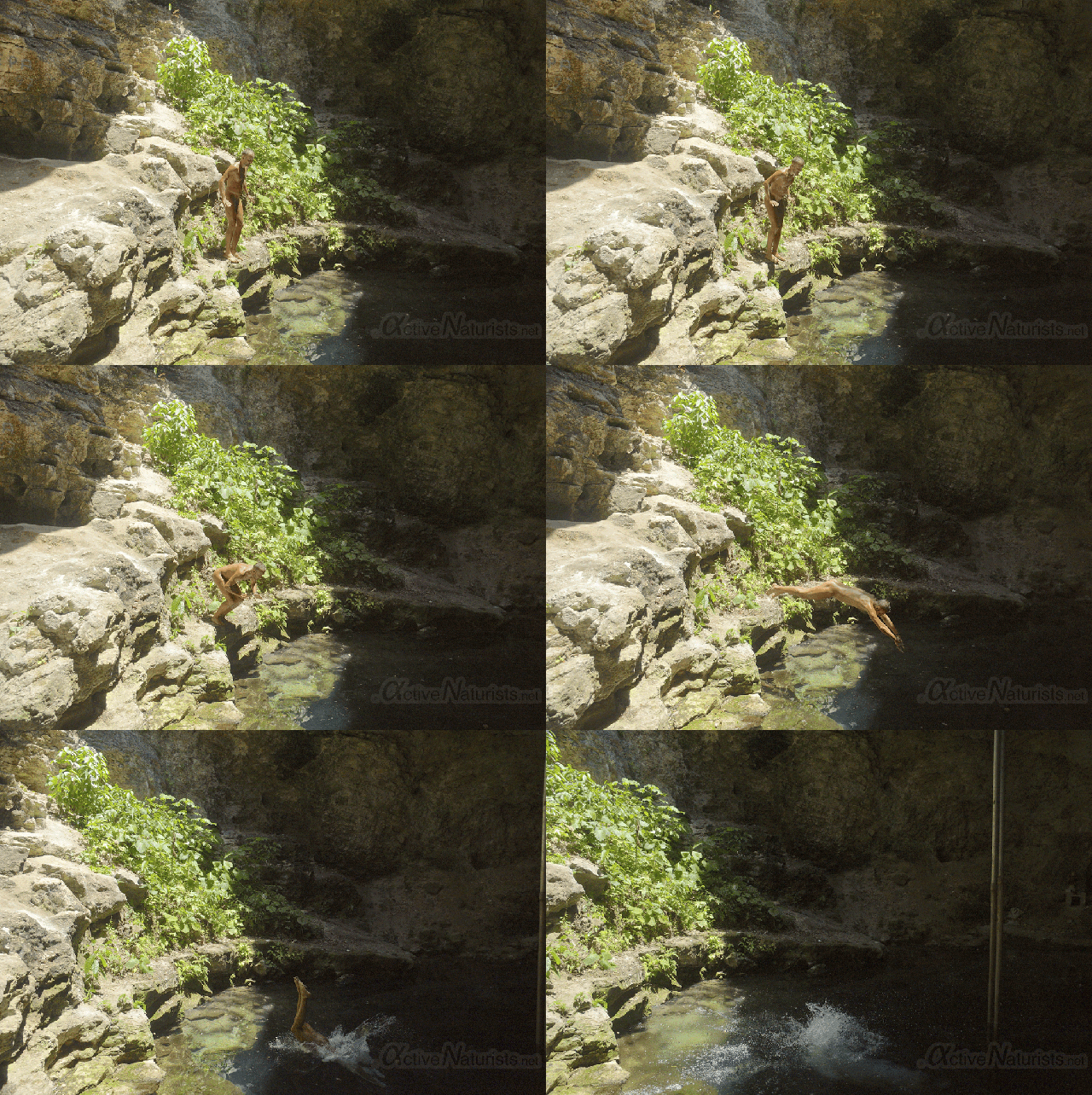
I was visiting a couple in Grass Valley, CA, that my wife and I had been skyping with for a possible polyamorous relationship. When we arrived, they showed us around town and took us to this beautiful place at the South Yuba river where people of all ages were skinny dipping, and I thought to myself “how often does one get the opportunity to go bouldering naked?” So I chose some short cliffs that wouldn’t pose too horrible an injury potential and let my wife and the other married couple bathe in the sun and take pictures while I “crazily risked my life.”

naturist bouldering 0001  South Yuba River, CA, USA

It was definitely a memorable experience, and more so for the bruises on the soles of my feet afterward. I’d love to go back again and find an area with an overhang so that I could fall off the rock purposefully into the cool summer water.

naturist bouldering 0000 South Yuba River, CA, USA

Rattling around in Harriman State Park woods

I though I had seen all what Harriman State Park near NYC provided, but a week ago, I saw something there that gave me goosebumps… and the urge to post about it, as a warning to other hikers in the area. So, this is what awaited me at the white trail right by the Pine Meadow Lake:

rattlesnake 0000 Harriman State Park, NY, USA

Yes, a rattlesnake! Curiously enough, when we were hiking towards the lake the day before, Sergei wondered if we should watch out for snakes. None of us had seen venomous snakes in the area (but I did report on non-venomous snakes in the previous blogpost about Harriman), and I noted they were actually pretty rare in New York State. But I was lucky to see one on the way back.

rattlesnake 0001 Harriman State Park, NY, USA

Well, when I said  I was ‘lucky’ to see it, I really meant it and for two reasons. First of all, if you see a snake, you are more than likely to be safe, unless it is a spitting cobra. Snakes don’t have any reason to bite humans unless they feel threatened… which mostly happens when we do not see them and step on them. Second, it was a rare for New York State timber rattlesnake, a threatened species actually; threatened, in wildlife conservation terms, otherwise it looked magnificently calm. This was probably the third reason why I felt lucky to see it, I was thrilled to take some photos of it, there was indeed something hypnotic about its gaze.

rattlesnake 0002 Harriman State Park, NY, USA

Was it daydreaming looking in the clouds?

rattlesnake 0003 Harriman State Park, NY, USA

Or was it waiting for a hiker to bite? Seriously though, I was concerned that the next hiker might be not that attentive and could step on it. I hesitated on whether to try to scare it off the trail or just leave it alone. I took a loooong stick and knocked on the rock near the snake, to which it moved slowly and took the tongue out to get a sense of what was happening around.

rattlesnake 0004 Harriman State Park, NY, USA

It still seemed to be very calm, so I decided not to disturb it anymore and leave it alone without making it aggressive (and feeling threatened!). The best thing I could do was warning the next hikers on the trail about it (just one couple), I hope they took it seriously coming from a naked guy! But again, if there was anything that the rattlesnake wanted to get a bite of, it was rather something like this toad – easier to swallow and digest.

toad 0000 Harriman State Park, NY, USA

Later on the same trail, I saw a much more dramatic episode from arthropod life. See this little hole in the ground covered by moss? It’s a home of a cricket, but not for too long!

ichneymon wasp, spider, cricket 0000 Harriman State Park, NY, USA

First, I noticed an ichneumon wasp carrying a paralysed spider heading towards the hole. I immediately recognised it, because by coincidence, ichneumon wasps were mentioned in the chapter of the book that I was reading on that day in the morning – ‘The Greatest Show on Earth: the Evidence for Evolution‘ by Richard Dawkins. He mentioned that young Darwin was disgusted by their behaviour, which made him wonder about presence of any kind of ‘morality’ in nature, as they lay eggs in paralysed but still alive victims that are later being eaten alive by the larvae! But in the end, nature is neither moral or immoral, it is amoral…  So, my amoral ichneumon wasp left her paralysed spider aside and went to check on the hole.

ichneymon wasp, spider, cricket 0002 Harriman State Park, NY, USA

That’s when I saw the cricket, the wasp clearly didn’t want its company, and the cricket left.

ichneymon wasp, spider, cricket 0001 Harriman State Park, NY, USA

By the time the wasp went to pick up the paralysed spider, the cricket returned to the hole; now the wasp put the spider closer and went into the hole again.

ichneymon wasp, spider, cricket 0004 Harriman State Park, NY, USA

It must have been much clearer with the cricket this time, as it left the hole and jumped away immediately. Finally, the was could bring the spider in the hole…

ichneymon wasp, spider, cricket 0003 Harriman State Park, NY, USA

Well, if it was only that easy! She didn’t think much about what side she should have carried it first (I bet she should have pull it from the head first), but eventually she managed to pull it down in the hole… and do her dark deeds, for which I (thankfully) couldn’t be a witness anymore.

ichneymon wasp, spider, cricket 0005 Harriman State Park, NY, USA

To continue with the insect topic, there was one type that I was particularly hyped about this summer – cicadas. 2013 was the year for the East Coast brood of 17-year periodical cicadas to come out.

Here is a great video about them.

I thought Harriman State Park would be an ideal place to camp out with the cicada noise on the background, but we haven’t found a place where they’d be as abundant as on the video above.

cicada 0001 Harriman State Park, NY, USA

However, we saw some blueberry bushes with a lot of exoskeletons shed by cicada nymphs after molting, and I even noticed one on the top of a dry tree at the final stage of molting (just like the video explained),

cicada 0000 Harriman State Park, NY, USA

but there was no such overwhelming background noise as I expected; maybe our timing was wrong.

Now, periodical cicadas are gone underground for another 17 years, but while hiking in Harriman last time, we noticed that the grasshoppers were particularly plentiful.

grasshopper 0000 Harriman State Park, NY, USAgrasshopper 0001 Harriman State Park, NY, USAgrasshopper 0002 Harriman State Park, NY, USA

To finish off with the insects for now, here a pretty furry moth – looks more like a winter outfit to me.

moth 0000 Harriman State Park, NY, USA

By the way, blueberry bushes were not only full of cicada nymphs but of the fruit too! I’m not posting more photos with blueberries as I did enough last year – luckily, these do not come about only every 17 years! There are also some other fruits that will ripen later in summer.

hickory 0000 Harriman State Park, NY, USA

These are fruits of hickory; they are related to walnuts and pecans, but depending on a species may be too bitter to be eaten… there is only one way to find out.

witch hazel 0000 Harriman State Park, NY, USA

And these are witch hazels; despite the name, witch hazel is not related to hazelnuts but is edible and has some medical properties too.

Here is a couple of odd trees from the last hike.

bizarre tree 0001 Harriman State Park, NY, USAbizarre tree 0000 Harriman State Park, NY, USA

I mentioned Canada geese at Silver Mine Lake in my first blogpost about Harriman, but this summer we saw some young ones too

canada goose 0000 Harriman State Park, NY, USA

and they were really cute.

canada goose 0002 Harriman State Park, NY, USA

It is funny though, that in my first blogpost I used Canada geese as an example of an animal less menacing than a bear (we saw one in Harriman in 2011), and I still think they are, but one of them got particularly friendly with us, especially with Christian. Well, friendly is probably not the right word as it was very attracted to his toes and a couple of times tried to bite them! Christian was lucky though it was a foot fetishist goose 😀

canada goose 0004 Harriman State Park, NY, USA

Not that it looked really dangerous, but it might have been a serious bite, judging by the strong beak and spiky tongue of the goose.

canada goose 0003 Harriman State Park, NY, USA

After that scary incident, I had to meditate in tranquility to feel safe again.

naturist 0002 Harriman State Park, NY, USA

You can actually find some very cozy places to sit and reflect about life

naturist 0003 Harriman State Park, NY, USA

or simply enjoy the view.

naturist 0004 Harriman State Park, NY, USA

Mountain laurels were in full bloom by mid-June, and Lake Skannatati looked particularly picturesque.

naturist 0005 Harriman State Park, NY, USA

This summer is apparently wetter than usual, and you could tell by the waterfall at the dam of Lake Skannatati. Not that it couldn’t be blocked by two strong men 🙂

naturist 0008 Harriman State Park, NY, USA

We also noticed some drastic changes downstream, probably due to the storm Sandy, but it still provided a great background for photos.

naturist 0007 Harriman State Park, NY, USA

Well, that’s about it for now, it was quite a diversion from my plans to start posting about my bike trip in California last summer. This was one of the most beautiful sunsets I’ve seen, I loved it how the sun was going down behind the trees on the hill and you could still see it.

sunset 0000 Harriman State Park, NY, USA

PS There probably will be another blogpost before Californian series, as I just got fully body-painted at Times Square yesterday!

“Bouncing Buns” 7k Trail Race in PA and 10 mile Summer Solstice Hike in VT next week

In the season of the World Naked Bike Ride across the Northern Hemisphere, there is another chance for active naturists to become also naturist activists: Bouncing Buns 7k Trail Race in Pennsylvania for American Cancer Society on the 22nd of June, Saturday next week! 7km is the longest distance that I’ve seen for a naked or clothing-optional race (correct me, if I’m wrong), it’s good to be challenged, moreover for a good cause. Well, last year, I passed the challenge pretty well, coming in third! It looks like this time I will go with several people, so competition grows even among my buddies! I hope to see some of my readers there too.

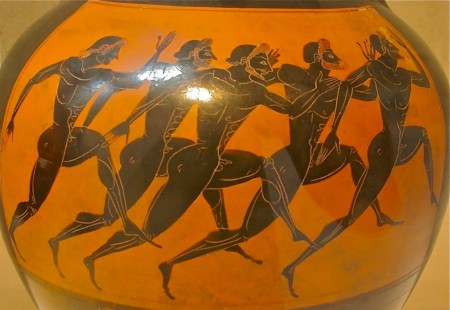
The event is organized by Pretzel City Sports and you can register for the race at their website. Your $30 registration fee will support American Cancer Society, and afterwards you get an opportunity to hang out at Sunny Rest naturist resort, where the trail race will take place. It’s a great opportunity to run just the way you like. The event is clothing optional, and we’ll certainly opt for the style of the [original] Olympic runners 😉 Also, if you have any doubts about running naked, have a look at my brief overview that links running and our naturally naked (furless) body from an evolutionary perspective – I hope it’ll make sense to you.

Also, I was asked to remind about the traditional Summer Solstice Hike in Vermont by its organiser Ed. I haven’t taken part in this one, but it sounds really great:

“A group of us gets together to celebrate the Summer Solstice on the The Appalachian Trail in Vermont. It’s on Fri, June 21st and anyone is welcome to join us. This is a 10 mile hike with plenty of photo ops, a swim in Little Rock Pond and maybe camping overnight. We meet at the parking lot on USFS #10 at 9AM. This road is off of US Rte 7 in Danby. From the south you take a right onto Brooklyn Ave, cross over the railroad tracks and drive for a boy 4 miles and the parking lot is on the right where the AT crosses. Here is a pic of the swim in Little Rock Pond.”

IMGP8684

If you have any further questions, ask Ed by email.

new cenotes in Yucatan

This will be the final post of the ‘Mexican series’ for now, and I feel that another review of recently discovered cenotes is an appropriate finale. After I found out how beautiful and unique cenotes were – they are a special kind of sinkholes typical to Yucatan peninsula – I wanted to explore more of them. The problem with cenotes, in my opinion, is that being a tourist attraction, many appear overdeveloped to the point when they don’t even look natural anymore (with convenient stairs, decorations, souvenir shops around). So, we set up a goal to find some of the least explored cenotes.

We found a description of Chaak-Tun in a travelog that made us believe it was a kind of untouched natural wonder. But when we arrived there, it became clear it was ready for mass tourism, just waiting for the road built next to it to get asphalted. The price was already quite steep, at 200 pesos (for foreigners, 60 for Mexican citizens). Nevertheless, we enjoyed the visit, and it was not crowded. There were two caves, both with stalactites and stalagmites.

naturist 0000 Chaak Tun cenote, Quintana Roo, Mexicocaves

The second one did not have any natural light, so the mild artificial lighting was justified.

naturist 0001 Chaak Tun cenote, Quintana Roo, Mexico

While there was no one around, I took a chance for skinny-dipping 🙂

naturist 0002 Chaak Tun cenote, Quintana Roo, Mexico

Another cenote that we visited in Tulum area  was ¿Cementerio de Mascota? (Pet Cemetery). It was discovered recently and has not been fully developed for visitors (yet). I put question marks around the name, because we are actually not sure if what we saw was cenote Cementerio de Mascota or an unnamed cenote in the same area. Tomas only knew that it was supposed to be further down the road that goes to the famous cenote Dos Ojos, and we got directions entering the park, but we never saw any indications to it, so we couldn’t be certain.

naturist 0004 Pet Cemetery cenote, Quintana Roo, Mexico

Once we passed the much-visited cenote Dos Ojos, we decided to continue the walk naked. The forest was green as the rain season was starting, and some trees were blooming.

blooming tree 0000 on the way to Pet Cemetery cenote, Quintana Roo, Mexicoblooming tree 0001 on the way to Pet Cemetery cenote, Quintana Roo, Mexico

And some were even fruiting, like this wild papayo (papaya plant).

papaya 0001 on the way to Pet Cemetery cenote, Quintana Roo, Mexicopapaya 0000 on the way to Pet Cemetery cenote, Quintana Roo, Mexico

I liked those ‘tree-hugging’ epiphyte cactuses too (they reminded me of myself on the coconut palm tree).

epiphyte cactus 0000 on the way to Pet Cemetery cenote, Quintana Roo, Mexico

As the air was cooling down (it was late afternoon), more and more birds started singing, but we didn’t see the possessors of this hanging nest.

hanging nest 0000 on the way to Pet Cemetery cenote, Quintana Roo, Mexico

Eventually, the road had a steep turn to the left, and there was a sign to cenote Sac-Actun (one of the longest underwater cave systems). We decided not to turn and continued in the same direction, passing through the wooden gates; but almost immediately after that, the road turned right. We were not sure whether it would bring us to Cementerio de Mascota, and decided to follow the road for not more than half an hour. We soon reached a spot with a layer of sand that seemed to have been washed out of somewhere… then we saw the pipe that was probably used for that and followed along it.

naturist 0003 Pet Cemetery cenote, Quintana Roo, Mexico

The trail was going downwards, and the trees were getting bigger and greener – a good sign of proximity of water.

banyan 0000 on the way to Pet Cemetery cenote, Quintana Roo, Mexico

There it was!

cenote0000 Pet Cemetery cenote, Quintana Roo, Mexico

However, there was something weird about it. It almost looked like a crime scene! Or like people were rushed out, leaving their diving equipment, food, and half-full (or half-empty? :D) glasses of wine!

cenote0001 Pet Cemetery cenote, Quintana Roo, Mexico

Well, what I guess in reality happened was that there were some ‘cleaning’ works on the site, which will eventually transform this cenote into another tourist attraction. To us, it would have actually been more attractive in its virgin state, but at least we could explore it a bit before it was going to be discovered by mass tourism.

naturist 0000 Pet Cemetery cenote, Quintana Roo, Mexico

We snorkelled, and given the atmosphere of the place (and its name too!), we were happy to have seen nothing but fish in water.

naturist snorkel 0001 Pet Cemetery cenote, Quintana Roo, Mexico

After we got out of water, we heard some noise in the woods, then we saw the trees shaking! Almost as if someone was trying to fell them with brute force. Soon we figured out what it was: monkeys were jumping from one tree to another. They were actually coming in our direction, so I quickly installed a telephoto lens on my camera. The monkeys got quiet for a moment… and then they reappeared right above us! But they moved so fast in the canopy that we didn’t manage to get any decent shots.

On the way back, we stopped by another small cenote just a bit off the road to/from Dos Ojos.

naturist 0000 on the way to Pet Cemetery cenote, Quintana Roo, Mexico

It made a perfect refreshing skinny-dipping experience before we would get back to the main road to catch ‘camioneta’ (minibus) to Tulum.

naturist 0005 Pet Cemetery cenote, Quintana Roo, Mexico

A couple of days later we were joined by Miguel, who showed me some less known cenotes previously. This time we wanted to see recently open cenotes in a place that was called, very promisingly, Cenotillo.  Apparently, Cenotillo boasts more than a hundred of cenotes! We had a map that listed just a few of them.

Cenote Usil (Ucil) seemed to be the closest to this little town.

cenote 0003 cenote Usil, Yucatan, Mexico

Probably for this reason, there was some rubbish around but surprisingly there was nobody there.

cenote 0002 cenote Usil, Yucatan, Mexico

It was the perfect time of day to see solar reflections on the roof of the cenote.

naturist dive 0010 cenote Usil, Yucatan, Mexico

The water was quite cold, and it seemed bottomless! Perfect for a skinny dip-dive 🙂

naturist-dive,-cenote-Usil,-Yucatan,-Mexico-(s)

We were up to visit more cenotes, so we left pretty soon.

naturist 0000 cenote Usil, Yucatan, Mexico

By the way, cotton trees seemed to dominate the forest around Usil, but I preferred them to keep the cotton for themselves. I don’t mean that just because we didn’t need clothes in that weather, but also because quite a lot of that fibre was accumulated on the water surface of cenote.

cotton tree 0001 cenote Usil, Yucatan, Mexicocotton tree 0000 cenote Usil, Yucatan, Mexico

After that, we went back to the village in hope to ask for directions for other cenotes. Local police happened to be the best at giving advice, and we were even escorted by a policeman to a guide-vigilante Dani who curated some of the cenotes just recently open to public.

The first one we went was cenote Xoch. Luckily, Dani was absolutely cool with the idea of naturism and didn’t even blink when I got naked while walking through the forest on the way to cenote.

naturist 0003 cenote Xoch, Yucatan, Mexico

We were truly amazed when we reached the cenote. It was almost as big as the Sacred Cenote at Chichen-Itza. Unfortunately, to my view at least, they’ve already made some basic constructions next to it, but hopefully there won’t be much more than that.

naturist 0000 cenote Xoch, Yucatan, Mexico

Another disappointment came from the strictly enforced rule of wearing life vests, because “the bottom of cenotes hasn’t been explored yet”.naturist 0001 cenote Xoch, Yucatan, Mexico

For someone who can swim well, it seems to be an absurd requirement for swimming in absolutely tranquil waters of cenote, but at least Dani didn’t make me wear swim trunks 😀

naturist 0002 cenote Xoch, Yucatan, Mexico

Then we went to cenote Kaipech.

cows 0001 cenote Kaipech, Yucatan, Mexico

It was next to a cattle farm, but nobody was around; the cows seemed to be intrigued by our appearance.

cows 0000 cenote Kaipech, Yucatan, Mexico

Despite being next to the farm, Kaipech was probably the least developed cenote of this scale that I’ve seen!

cenote 0002 cenote Kaipech, Yucatan, Mexico

There was no ladder, so we had to go down by the rocks (luckily trees and their roots were of great help with that), but this is what made this cenote my favourite one perhaps.

naturist 0001 cenote Kaipech, Yucatan, Mexico

This cenote still felt untouched, although we definitely weren’t the first ones to visit it: a couple of plastic bottles were floating in water. Dani said this cenote was next in their plans for development to bring tourism in the area. But in my opinion, they should not change anything about it, it is just as perfect in its virgin state as it gets. They should only keep it clean…

We cleared the entry point of floating rubbish and went for a swim.

naturist 0000 cenote Kaipech, Yucatan, Mexico

This place seem to be teeming with wildlife. Judging by the constant buzz in the distance, there was a beehive around, so one has to be careful not to come too close to it. I also saw a basilisk, aka Jesus Lizard because of its ability to run on water, but this time it was just sunbathing on a branch above water. The seeds on the photo below are “snakes’ food” according to Dani, but it is hard to believe that, as all snakes are exclusive carnivores, as far as I know. I wouldn’t mind sitting there for a while and observe if any snakes come to eat those berries.

snake berries 0000 cenote Kaipech, Yucatan, Mexico

There was also a nest with one egg that could be easily seen, but I guess the trick was that it was on a palm tree leaf right above water, so any crawling intruders were likely to fall down.

nest 0000 cenote Kaipech, Yucatan, Mexico

As usually near cenotes, there were some blue-crowned motmots, locally known as ‘pajaro toh’. These birds are brightly coloured and have various distinct calls. I can still hear them calling to visit those picturesque and yet mysterious cenotes!

toh bird 0000 cenote Kaipech, Yucatan, Mexico

kayaking in mangroves in Yucatan

Traveling with some new friends in Yucatan, I wanted to arrange another sailing trip at Progreso, a port town near Merida. Luckily the owner of the boat, Samuel, had free time when we were there and the forecast was pretty good… until the last moment. When the wind started getting stronger and the waves, higher. When we left the haven, it looked too dangerous to go in the open sea and we retreated…

Thanks to having a local with us, we quickly figured out an alternative to naked sailing in the open sea – kayaking in mangroves! Luckily, La Ria, eco-touristic centre in Progreso, was right nearby, and and there was also a bus line that could easily bring us back to Merida. We rented single kayaks, as those were easier to manoeuvre judging by my previous experiences in Long Island Sound, which was even more important for passing through channels in mangroves.

naturist 0003 mangroves, Progreso, Yucatan, Mexico

Those narrow ‘trails’ were actually quite tricky to paddle through, as the oars were just too long to move between the mangrove trees. We discovered that the best way to move forward was to simply push branches above us with hands; that is probably the closest we can to the state of a monkey leaping from one tree to another.

naturist 0000 mangroves, Progreso, Yucatan, Mexico

It was nice that the first part of the trail went in the middle of dense mangroves, so that we stayed in their shade while the sun was high. There were different species of mangrove trees that had various adaptations for living in saline tidal waters. Red mangroves (on the left of the photo below) use stilt roots to keep the rest of the plant above the high tide margin, while black mangroves (on the right) us pneumatophores (specialised root-like structures which stick up out of the soil like straws) to deliver oxygen to the root system.

naturist 0011 red and white mangroves, Progreso, Yucatan, Mexico


naturist 0007 mangroves, Progreso, Yucatan, Mexico

Many trees were full of fruit and blossom, though the latter is not very noticeable.

red mangrove flower 0009 mangroves, Progreso, Yucatan, Mexico

It is actually quite amazing that the seeds of many mangrove species germinate while still being on the parent tree – it is probably the best plant equivalent of pregnancy!

red mangrove fruit 0008 mangroves, Progreso, Yucatan, Mexico

When the seedling is mature enough to travel, it falls into water and floats until it finds suitable conditions to lodge in the mud and root.

mangrove fruit 0010 mangroves, Progreso, Yucatan, Mexico

After ‘crawling’ through the mangroves, it was relieving to emerge into open water!

naturist 0001 mangroves, Progreso, Yucatan, Mexico

Our next goal was to find an islet with shorebird colony. The guide from La Ria told us about it, but unfortunately they didn’t provide any maps to take with us, because “they would get wet”. After a bit of wandering, we finally saw it!

shorebird colony 0000 mangroves, Progreso, Yucatan, Mexico

It looked like any other island around but was chosen by dozens and dozens of various shorebirds for nesting.

heron 0000 mangroves, Progreso, Yucatan, Mexico

We saw herons, cormorants,

frigatebird 0000 mangroves, Progreso, Yucatan, Mexico

frigatebirds

pelican 0000 mangroves, Progreso, Yucatan, Mexico

and pelicans, of course.

pelican 0001 mangroves, Progreso, Yucatan, Mexico

After that, we checked out a couple of other channels in mangroves.

naturist 0002 mangroves, Progreso, Yucatan, Mexico

One of the trails seemed particularly promising but it didn’t lead anywhere.

naturist 0004 mangroves, Progreso, Yucatan, Mexico

When we came back to the opening, we saw a boat leaving from La Ria, but it went back immediately. We figured that they were probably worried about us already and were relieved to see us. I doubt they could see that we were naked though, but would that matter to them? This is how we do 🙂

naturist 0006 mangroves, Progreso, Yucatan, Mexico

Upon return to ecolodge, we chilled in the shade and had a delicious seafood lunch. So the day didn’t go quite like we had planned, but obviously we had no regrets! Kayaking in mangroves is so much fun!

Palenque – hiking in the rainforest around ancient Mayan site

naturist 0024 Palenque, Chiapas, Mexico

I visited several Mayan sites throughout southern Mexico, and Palenque definitely stood out thanks to some of the most magnificent ruins surrounded by equally majestic tropical rainforest. It is a popular tourist site, so don’t expect me to streak right there.

naturist 0021 Palenque, Chiapas, Mexico

However, I didn’t miss the opportunity to explore the jungle right around Palenque ruins in the buff. naturist 0023 Palenque, Chiapas, Mexico

Given the warm and humid tropical climate, this idea was nothing odd. The only tricky part was that I was going to get a guide, as I was alone this time and didn’t want to get lost on the unknown territory. Upon arrival to the ruins, I was immediately approached by one of many certified guides awaiting tourists. His name was Cruz; in case you happen to be in Palenque and find a guide with this name, maybe you’ll be lucky to have the same guy! He first offered a tour at the ancient site itself and just briefly mentioned the protected rainforest around it. I was intrigued about the latter, and he convinced me that it was actually one of the best preserved virgin tropical rainforests in the area.  However, I figured that I’d be able to get around the ancient site on my own and would rather need a guide in the forest. As we were discussing hiking in the areas where very few visitors ventured out, it wasn’t long till I asked Cruz my burning question: “Could I hike naked?” He seemed puzzled for a second, so I briefly explained him the concept of naturism. Also, in that weather, the clothes is definitely obsolete… “and, – I continued – that’s probably how your ancient Mayan ancestors explored the jungle too”. Cruz seemed convinced and even murmured that I wouldn’t be the first tourist to do so either.

So, after I was done with the pyramids, temples and castles, Cruz met me again, carrying a machete this time, and we headed to the trail. Well, actually there was no trail, we just walked by a small spring. There were clear signs of more ruins still covered by the forest, and Cruz said that was what satellite images suggested; the whole site was taken over by forest after it was abandoned, and only a fraction was cleared after its rediscovery.

naturist 0000 Palenque, Chiapas, Mexico

There were a lot of snails in the creek, and Cruz collected them for a later meal.

snail 0010 Palenque, Chiapas, Mexico

In some places, we had to do a little bit of rock-climbing.

naturist 0001 Palenque, Chiapas, Mexico

Maybe it was the sweat after all that, or my ‘ancient Maya’ argument was so strong, but when I told my guide that he should as well hike naked like me, he liked the idea. It seemed to me he only waited till I would suggest him to disrobe.

Somewhere midway up the hill, we left the creek bed and turned right into the jungle. That’s where Cruz made use of his machete, although he still lead the path up the easier way, e.g., along fallen trees.

naturist 0002 Palenque, Chiapas, Mexico

We saw some beautiful flowers on the way, like this heliconia, for example.

heliconia 0013 Palenque, Chiapas, Mexico

However, these blue leaves appeared far more extraordinary, as blue is not a very common colour even among flowers, let along leaves.

naturist 0014 Palenque, Chiapas, Mexico

Cruz told me a lot about local plants, but unfortunately I cannot recall most of it. I remember seeing papayas in places where sunlight wasn’t blocked by tall trees,

papaya 0012 Palenque, Chiapas, Mexico

but there were also some fruits that weren’t edible.

palm tree fruit 0011 Palenque, Chiapas, Mexico

I thought that this vine was a passionfruit, but Cruz said it was something else. I forgot if he said it was edible, although it did not look ripe in any case.

passionfruit 0015 Palenque, Chiapas, Mexico

It was great to see such a diversity of fruits, it made me confident that with certain knowledge I’d be able to survive there, if I were lost; especially papayas looked encouraging in that respect. That was a tropical rainforest after all! Though after very good blueberry season in New York last summer, I can’t complain here either.

Well, the forest wasn’t just full of plants, there were animals too, but most of them would rather avoid encounters with humans, especially during day. There was one notable exception, though – a spider monkey!

spider monkey 0000 Palenque, Chiapas, Mexico

We were already on top of the hill, and Cruz pointed up one tree. There was a spider monkey, really close to us, munching some leaves calmly. It was fascinating to see how easily he moved through the trees, not without help of his fifth “limb”, the tail.

spider monkey 0003 Palenque, Chiapas, Mexico

And it’s not like he didn’t see us, he stared at us curiously for a while and didn’t seem to be worried.

spider monkey 0001 Palenque, Chiapas, Mexico

He continued his business and then would only pay attention to us when Cruz imitated spider-monkey calls.

spider monkey 0004 Palenque, Chiapas, Mexicospider monkey 0005 Palenque, Chiapas, Mexico

According to Cruz, monkeys are the only wild animals in the area that feel at ease near humans, maybe because of our close evolutionary kindred. Then it definitely helped that we were naked. Have I mentioned he was naked too?

spider monkey 0002 Palenque, Chiapas, Mexico

After he left, I realised I was hungry too, so I happily got to my mangos and other local fruits.

naturist 0008 Palenque, Chiapas, Mexico

Although we were on top of the hill, we could not see much around because of the trees, and I didn’t feel like climbing those.

naturist 0016 Palenque, Chiapas, Mexico

It was time to go down, but we went by the other side of the hill, and soon reached the dry bed of another creek.

naturist 0009 Palenque, Chiapas, Mexico

We heard some loud animal calls, so I hid under the huge leaf of anthurium.

naturist 0005 Palenque, Chiapas, Mexico

It had two holes that perfectly matched my eyes… but no one showed up.

naturist 0017 Palenque, Chiapas, Mexico

We continued walking, and I was mesmerised by some very tall trees.

naturist 0003 Palenque, Chiapas, Mexico

Even some lianas grew as thick as trees.

naturist 0018 Palenque, Chiapas, Mexico

When we reached the spring, it was nice to refresh in its cool water,

naturist 0006 Palenque, Chiapas, Mexico

and we continued our hike down along it.

naturist 0007 Palenque, Chiapas, Mexico

We were approaching the border of the forest, however, so after some final naked shots, it was time to get dressed again.

naturist 0004 Palenque, Chiapas, Mexico

Then I took photos of the ruins in the nice late afternoon sun.

naturist 0019 Palenque, Chiapas, Mexico

Now I had a pretty good impression of what that wooded hill next to the ruins was like.

naturist 0020 Palenque, Chiapas, Mexico

It was hard to judge whether I was impressed more by the magnificent constructions or the equally splendid forest… Probably it was the combination of both that made Palenque very special.

skinny-dipping in cenotes (sinkholes) and hiking in a “naked” forest in Yucatan

Frankly, before going to Mexico, I had never heard the term ‘cenote‘, which refers to a deep natural sinkhole, typical to Yucatan peninsula, but as soon as I heard the description and searched for images, I had no doubt I had to see those! They’re very different in appearance, size, history, accessibility. I’ve seen several cenotes, including the Sacred Cenote of Chichen Itza, but I was impressed most with two smaller but more secluded ones, that I was able to visit thanks to Miguel (who I got to know thanks to Couchsurfing again – have I mentioned how much I value that site?).

So, imagine yourself in a dry forest, and then you see a hole in the ground like this one.

naturist 0001 cenotes near Merida, Yucatan, Mexico

It’s just slightly bigger then the rabbit’s hole that brought Alice to Wonderland, and it feels like something magic is waiting for you there. It has a simple ladder that invites you to go down.

naturist 0002 cenotes near Merida, Yucatan, Mexico

It looks like it’s got a small exit to a magic garden all the way down in the end of the cave…

naturist 0003 cenotes near Merida, Yucatan, Mexico

But in fact, it’s just a reflection of the entrance, because the water is so clear, you can barely see it from above!

naturist 0004 Dzom-Bacal cenote near Merida, Yucatan, Mexico

When we arrived to this cenote, we were lucky to have no one else around, so surely enough I got naked. Skinny-dipping in cenotes, definitely something to remember!

naturist 0010 Dzom-Bacal cenote near Merida, Yucatan, Mexico

After a while we heard some people approaching to the cave, but it was the time to go further anyways. This truly marvellous cenote is called Dzom-Bacal and is located in the end of a dirt road in the midst of a deciduous tropical forest south of Merida. Since the road was barely used, we felt comfortable to bare it all and enjoyed our walk in the buff! It felt so right in that warm and dry weather.

naturist 0013 cenotes near Merida, Yucatan, Mexico

As it was just the beginning of spring, which in this part of the world is linked not so much to the warmer weather but to the arrival of rains after dry ‘winter’, most of the trees didn’t have leaves were naked too.

naturist 0005 cenotes near Merida, Yucatan, Mexico

Ironically, the most naked tree of all was a cotton tree, easily distinguishable by its fruits with cotton fibres.

cotton tree 0006 cenotes near Merida, Yucatan, Mexico

Boneto tree was also full of fruit, but they were not ripe.
tree 0008 cenotes near Merida, Yucatan, Mexicotree 0009 cenotes near Merida, Yucatan, Mexico

But besides trees, the forest was full of shrubs, cacti and agaves, so it was practically impenetrable,

naturist 0017 cenotes near Merida, Yucatan, Mexico

except for the parts where barren limestone didn’t let plants to grow over.

naturist 0011 cenotes near Merida, Yucatan, Mexico

So, we didn’t go away from the road much,

naturist 0014 cenotes near Merida, Yucatan, Mexico

just to look at some flowers once in a while.

naturist 0012 cenotes near Merida, Yucatan, Mexico

I used to have a similar species of cactus at home, it was nice to see its wild counterpart in natural habitat in a blooming state.

cactus flowering 0000 cenotes near Merida, Yucatan, Mexico

Some trees started blooming too, I bet this forest was going to turn into a beautiful garden as soon as rains would become more frequent.

blooming tree 0007 cenotes near Merida, Yucatan, Mexico

It was so nice to walk there just like that, surrounded by beautiful nature and caressed by the rays of the setting sun.

naturist 0015 cenotes near Merida, Yucatan, Mexico

We found a trail that didn’t seem to be used by cars at all, but unfortunately we didn’t have much time to explore it.

naturist 0016 cenotes near Merida, Yucatan, Mexico

We wanted to see one more cenote in the area, X-batún. This one looked a little more developed and touristy, but probably because we came so late, last visitors were leaving just as we arrived. So, guess what, we were lucky to be able to go skinny dipping in X-batún too!

naturist 0020 X-batun cenotes near Merida, Yucatan, Mexico

This cenote was more open, so banyan trees hung their long roots graciously from the edge of the upper level all the way down to the water. We let it all hang out too, and enjoyed a bit of splashy splash time on the warm evening.

naturist 0019 X-batun cenotes near Merida, Yucatan, Mexico

hiking at Mount Tauhara, New Zealand

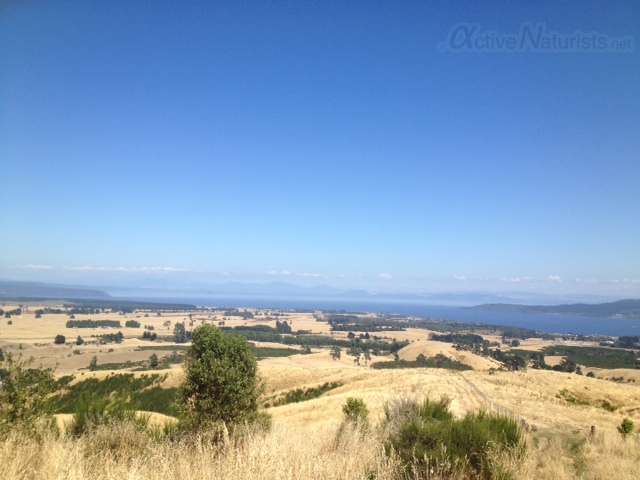
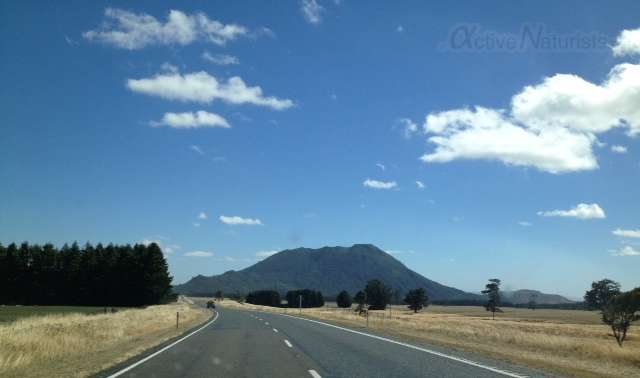
The central region of the North Island of New Zealand is known for its picturesque views of Lake Taupo, Rotorua, Mount Ruapehu, Waikato River and the famous Tongariro Crossing. While these places are worth a visit, there is another peak that is worth a climb.

naturist 0000 Mount Tauhara, North Island, New Zealand

New Zealand does not have any specific laws that prohibit nakedness in public, so I decided to climb Mount Tauhara near Taupo nude on a recent sunny afternoon.

naturist 0001 Mount Tauhara, North Island, New Zealand

The climb begins by opening a gate to a cow farm. The cows were staring and mooing at me as I passed. Watch out for the cow dung! The beginning of the hike is rather open, with little tree cover so I waited to disrobe until I was under cover (I forgot my sun cream). This section of the climb, through the farm, is the most strenuous as it is steep. This summer has been extremely dry and a drought has been declared in the area.

naturist 0002 Mount Tauhara, North Island, New Zealand

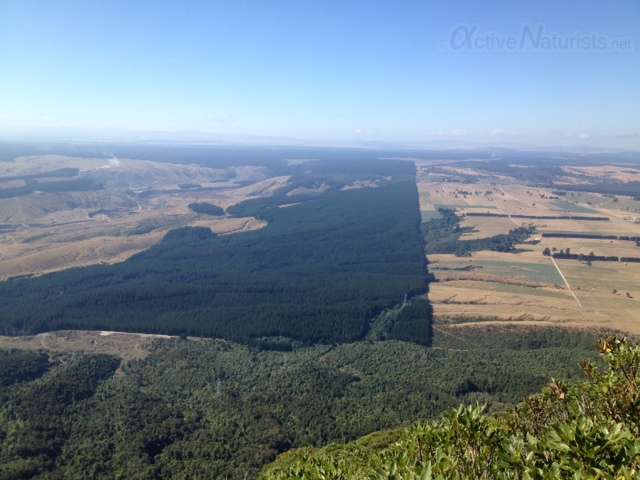
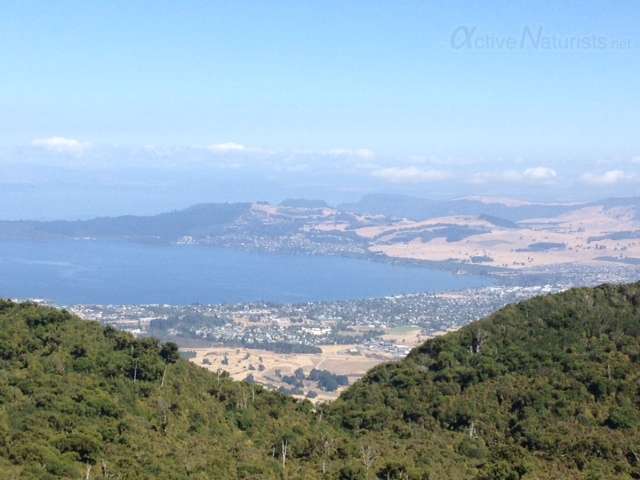
Once I reached the watering tanks, I removed my clothing and started through the lush green forest that surrounds the mountain. It was much cooler and my non protected skin was happy not to be completely exposed to the harsh sun. The covered section of the climb has some very gentle climbs and others that get much more steep. There is a waterfall during the trek up, but the drought has made it more of a trickle.At several points on the climb there are fantastic views of the city of Taupo, its lake, and on very clear days the peaks of Mount Ruapehu, Mount Ngauruhoe, and Mount Tongariro.

naturist 0005 Mount Tauhara, North Island, New Zealand

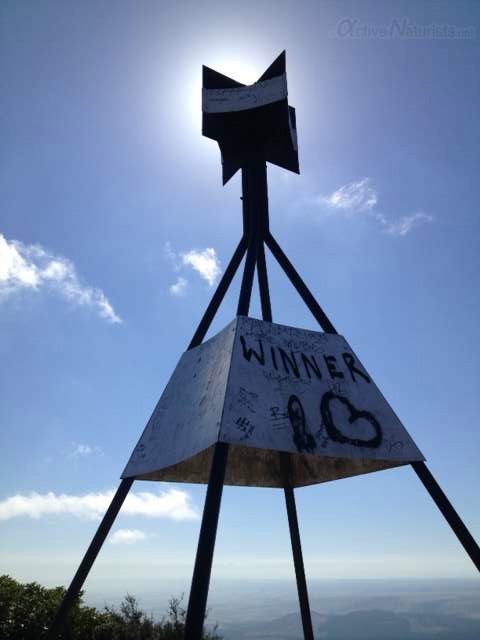
This day was a perfect. However, on cloudy or foggy days you can actually be above the clouds once you reach the top section. The 360 degree views are amazing. The peak has areas where you can walk and see other magnificent views.

naturist 0004 Mount Tauhara, North Island, New Zealand

The walk up the 1,088 meter climb is considered strenuous and takes approximately 90 minutes. It takes 45-60 minutes to climb down.

naturist 0003 Mount Tauhara, North Island, New Zealand

It is not well groomed and many locals are the people that climb it. Mount Tauhara is in a protected Maori area and access can be restricted by the tribe that protects it, so I was careful to have my shorts ready in case someone that protects the mountain objected to my nudity.

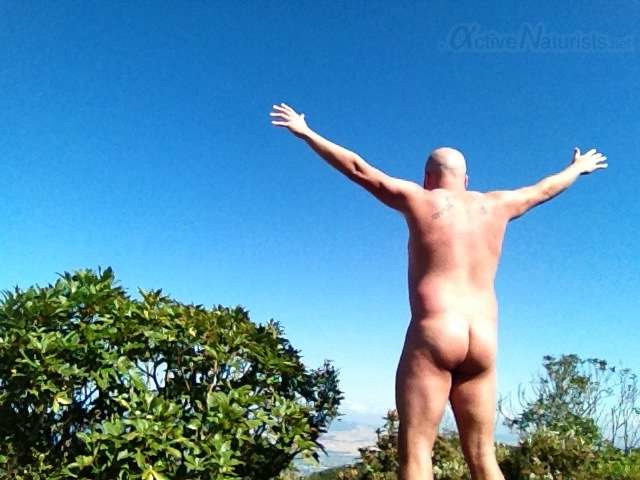
I have always had a meaningful experience on my 30 climbs of Mount Tauhara, and I am glad I finally completed the climb in the nude this time.   naturist 0006 Mount Tauhara, North Island, New Zealand

This a a guest post. Text and photos by Nick.

Orr Hot Springs and Montgomery Woods

While winter’s attempt to reinstall its reign over New York City on Monday night failed totally, with the morning rain washing down almost all snow and the afternoon sun dealing with the rest, my friends in Europe are still suffering from yet another particularly long and snowy winter. So, here is probably my last blogpost of the winter season. Well, this one is from Californian ‘winter’, so don’t expect anything like jumping in the ice hole in the Moscow River, or frolicking in the snow by the naked gym in Paris… but rather soaking in hot springs! California has lots of those, so Niko and I spent some time choosing which ones to visit on the way from Eureka to San Francisco. Orr hot springs called our attention by having a reputation of providing exquisite tranquility; it is a cute rustic resort with small cozy cabins, excellent self-service kitchen, and of course saunas and baths filled with natural thermal water.

naturist 0000 Orr springs, CA, USA

Orr hot springs are quite easy to reach from Bay Area, but seclusion is one of their key words. There is no cell phone service, no wi-fi, and actually, not even an official webpage! I don’t think there is a lack of visitors though, thanks to the word of mouth and reviews in Yelp… and websites like this one 😉 Therefore, to make sure there is a spot for you, reservations by phone are required +1 (707) 462-6277.

We arrived quite late in the evening and had the main bath for ourselves for a while.

naturist 0001 Orr springs, CA, USA

It was gorgeous full moon night, and mist gathering above the hot springs made the whole place look mysterious.

naturist 0002 Orr springs, CA, USA

In the morning, the mist highlighted sun rays peeking through bamboo.

naturist 0006 Orr springs, CA, USA

… and the mist that condensed on the grass around hot springs, provided another pretty display – hoar frost – and a proof that it did get down to freezing temperatures during the night.

naturist 0007 Orr springs, CA, USA

Not a problem though, if you are surrounded by hot springs and saunas.

naturist 0012 Orr springs, CA, USA

After absorbing the heat of thermal waters, it feels just great to walk around butt-naked despite the cold.

naturist 0004 Orr springs, CA, USA

By the way, the whole resort is clothing optional except for registration desk.

naturist 0005 Orr springs, CA, USA

We explored the territory of Orr for a bit,

naturist 0008 Orr springs, CA, USA

and after the check out time in the cabin (noon), we decided to go for a hike.

naturist 0009 Orr springs, CA, USA

Unfortunately, there are no trails starting at the resort, but there are some in its vicinity, in the Montgomery Woods State Natural Reserve.  The afternoon was getting quite warm, and as we turned away from the main trail, I felt comfortable to get unclad.

naturist 0010 Orr springs, CA, USA

This trail mostly featured young redwoods, as the area was probably still recovering after logging. One of the huge redwood stumps looked like a stage.

naturist 0011 Orr springs, CA, USA

We didn’t see much wildlife except for a few birds and a couple of these ancient-looking creatures, red-bellied newts.

red-bellied newt 0016 Orr springs, CA, USAred-bellied newt 0017 Orr springs, CA, USA

It was the first time when I saw an adult newt, as previously I only saw juvenile forms (efts) of a related species in Harriman State Park, NY. Adult forms aren’t that bright, except for the belly in this species. By the way, only preparing for this blogpost did I find out that their red belly “serves as a warning to potential predators, as [they] have enough of a neurotoxin … in their skin to easily kill an adult human”.

Speaking of warnings, soon we reached a fence with a sign saying that there was private property further up the trail and no trespassing was allowed. Why wasn’t there any warning in the beginning of the trail? We turned back and went down to the main trail, which went through old growth redwoods, including some of the tallest trees around!

naturist 0013 Orr springs, CA, USA

We didn’t have enough time to explore the whole trail, but even the trees near the beginning were impressive.

naturist 0014 Orr springs, CA, USA

In this forest of giants, we looked somewhat Lilliputian, but it made us appreciate only more the splendour of nature.

naturist 0015 Orr springs, CA, USA